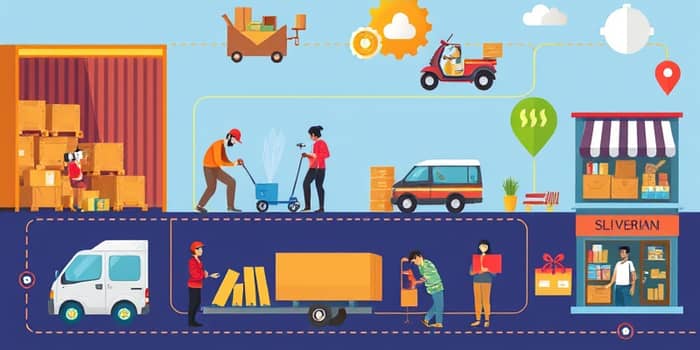
The journey from an initial idea to a delighted customer is paved by a sequence of strategic steps known as the value chain. Introduced by Michael Porter in 1985, this framework highlights how every activity—from ideation and design through production, marketing, and after-sales support—can be optimized to create a sustainable competitive advantage. By focusing on each phase’s contribution to customer value, companies can reduce costs or enhance differentiation while fostering loyalty and profitability.
Understanding the Core Concept
The value chain differs starkly from a traditional supply chain, which primarily tracks the flow of goods and materials. Instead, the value chain is a holistic, customer-centric approach that embeds value creation at every stage. Rather than merely delivering products, businesses analyze activities to identify inefficiencies, unlock innovation, and build stronger connections with end users.
Porter’s model categorizes activities into primary and support functions. Primary activities directly transform inputs into outputs and engage with customers, while support activities underpin those operations behind the scenes.
Primary Activities: Direct Value Creation
At the heart of the value chain are five interconnected stages. Each step is a chance to add unique value, driving either cost leadership or differentiation.
- Inbound logistics: Receiving, storing, and distributing raw materials with precision and timing.
- Operations: Transforming inputs into finished goods through manufacturing, quality control, and assembly.
- Outbound logistics: Managing warehousing and transportation to deliver products swiftly and safely.
- Marketing and sales: Crafting compelling messages, setting strategic pricing, and guiding purchase decisions.
- Service: Offering maintenance, repairs, and customer support to sustain long-term satisfaction.
By scrutinizing each primary activity, organizations can pinpoint cost-saving opportunities—such as automating repetitive tasks in operations—or elevate perceived value, like offering personalized service packages that cultivate brand loyalty.
Support Activities: Enablers of Efficiency
Behind every streamlined primary function lies a network of support activities that ensure seamless execution and continuous improvement.
- Firm infrastructure: Strategic planning, finance, and legal functions that maintain organizational stability.
- Human resource management: Recruiting, training, and developing talent to uphold performance standards.
- Technology development: Investing in research, software, and automation to spur innovation.
- Procurement: Sourcing quality materials and negotiating contracts to balance cost and reliability.
Well-coordinated support activities elevate the efficiency and effectiveness of the entire value chain. Investing in cutting-edge software tools, for example, can accelerate product design while reducing errors, thereby benefiting both operations and marketing.
Conducting a Value Chain Analysis
To harness the full power of the value chain, businesses must undertake a systematic analysis process. This involves dissecting each activity to reveal hidden inefficiencies and untapped opportunities.
- List sub-activities within each primary and support category to build a detailed map.
- Identify linkages where improvements in one area—such as technology—can amplify gains in another, like operations.
- Measure costs and value added using sales data, customer feedback, and market research to quantify impact.
- Implement targeted optimizations: eliminate low-value steps, streamline workflows, or bolster differentiation efforts.
Through continuous monitoring and adjustment, companies can maintain a dynamic model that adapts to market changes, ensuring long-term resilience.
Real-World Success Stories
Concrete examples illustrate how value chain thinking transforms businesses:
Fender Guitars segments its production by geography: American-made Stratocasters leverage U.S. craftsmanship and premium materials to justify a higher price point, while Mexican-made versions offer affordability without sacrificing core quality. This dual-tier strategy enhances market reach and underscores the brand’s commitment to both excellence and accessibility.
S’well Water Bottles combines sleek design with sustainable materials, guiding raw inputs through efficient production and marketing pipelines, and supporting returns and recycling programs. Their meticulous focus on each stage has fostered a loyal customer base that associates the brand with both style and responsibility.
Modern Applications and Sustainability
Today’s organizations face increasing pressure to operate responsibly and embrace digital transformation. Integrating sustainability into the value chain can yield cost reductions—through waste minimization and energy efficiency—while appealing to environmentally conscious consumers.
Digital tools, such as cloud-based collaboration platforms and AI-driven analytics, enable real-time monitoring of performance metrics across the chain. This data-driven approach fuels smarter decisions, from demand forecasting in outbound logistics to personalized marketing campaigns that resonate with target segments.
Overcoming Challenges and Limitations
Value chain optimization demands cross-functional collaboration and a willingness to challenge entrenched practices. Identifying the precise contribution of each activity can be complex, as interdependencies often blur accountability.
Moreover, sustaining improvements requires cultural alignment. Organizations must foster a mindset of continuous learning and innovation, empowering teams to propose and implement enhancements. With dedicated leadership and clear metrics, the value chain remains a living framework, not a static diagram.
Conclusion: From Insight to Impact
By embracing the value chain as a strategic lens, companies can unlock hidden efficiencies, captivate customers with differentiated offerings, and drive sustainable growth. Whether crafting a handcrafted guitar or launching a digital service, every stage—from inbound logistics to service—presents an opportunity to add meaningful value.
As markets evolve and technologies advance, the organizations that thrive will be those that view their operations as an interconnected ecosystem, continually refining each link to deliver exceptional experiences. Begin your value chain journey today, and transform your processes into powerful engines of customer delight and competitive strength.
References
- https://www.netsuite.com/portal/resource/articles/erp/value-chain.shtml
- https://www.salesforce.com/sales/value-chain/
- https://converged.propelsoftware.com/blogs/the-complete-guide-to-value-chain
- https://www.zendesk.com/blog/value-chain/
- https://lib.bakeru.edu/Supply-chain-and-value-chain/definitions
- https://quantive.com/resources/articles/value-chain-analysis
- https://online.hbs.edu/blog/post/what-is-value-chain-analysis
- https://www.thestrategyinstitute.org/insights/value-chain-analysis-explained-boost-efficiency-cut-costs-and-gain-competitive-advantage