As economies strive for growth beyond pre-pandemic averages, they face a spectrum of hidden costs that can undermine long-term resilience. While headline numbers highlight expansion, a closer look reveals soaring debt service burdens and other tensions that often go unnoticed.
This article unpacks the multifaceted economic costs of development, drawing on recent data from the US and global projections for 2026. We explore how fiscal strains, inflation pressures, labor shortages and policy shocks impose a real "price of progress".
The Hidden Burdens of Rapid Growth
Global growth is forecast to slow to 2.7% in 2026, below the 3.2% average before the pandemic. Despite pockets of resilience, many regions confront structural limits, from aging workforces to climate risks.
Growth ambitions often mask uneven regional economic performance. For example, East Asia may grow around 4.4% in 2026 while the EU struggles at 1.3%. This uneven landscape can amplify financial pressures in less dynamic areas.
Moreover, policy disruptions such as tariffs or government shutdowns have real impacts. The longest US federal shutdown on record shaved 1.5 percentage points from Q4 2025 GDP growth. These events not only stall output but also erode investor confidence.
- Trade tensions can drag growth by about 1% annually.
- Climate-related shocks impose sudden fiscal demands.
- Government impasses delay critical infrastructure projects.
Fiscal and Debt Pressures on Public Finances
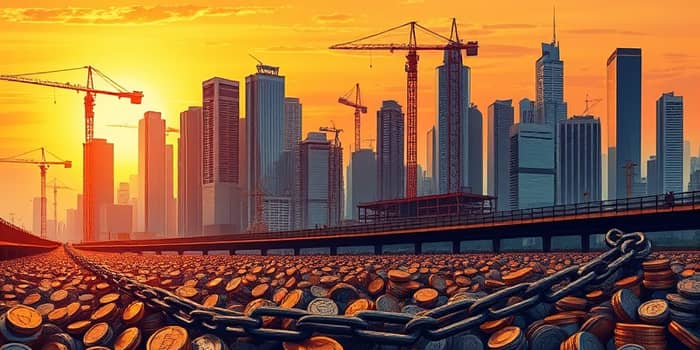
In the US, fiscal deficits rose to $1.9 trillion in FY2026 and threaten to climb above $3 trillion within a decade. This trajectory pushes federal debt toward 120% of GDP by 2036, crowding out resources for education and infrastructure.
Interest payments have already tripled to over $1 trillion annually since 2021, projected to consume more than a quarter of tax revenues in the next decade. Such obligations sacrifice flexibility when stimulus is most needed.
Developing economies face their own risks. Many operate near debt distress thresholds, with high borrowing costs and crowding out private investment in critical sectors like health and sanitation.
Inflation and Cost-of-Living Pressures
Headline inflation is set to ease globally from 3.4% in 2025 to about 3.1% in 2026. Yet for low-income households, persistent food, energy and housing costs keep mounting cost-of-living pressures firmly in place.
In the US, the PCE deflator is expected at 2.7% for the year, with core measures remaining above the Fed’s 2% target. This dynamic erodes purchasing power, prompting families to re-evaluate budgets and savings.
For small businesses, input cost volatility and supply bottlenecks hamper planning. Many firms struggle to pass on price increases without risking customer attrition or margin squeezes.
- Review household budgets and prioritize essential spending.
- Explore energy-efficient upgrades to reduce utility bills.
- Consider fixed-rate loans to hedge against rising rates.
Supply-Side Constraints and External Shocks
Labor markets in many advanced economies remain tight. The US unemployment rate hovers near 4.6%, reflecting tight labor market conditions and slowing the pace of growth unless immigration reforms or productivity gains emerge.
Infrastructure and housing supply also face headwinds. US single-family home construction has averaged under one million units annually, constraining affordability and adding to demand-driven inflation.
External shocks—from geopolitical tensions to climate events—can disrupt supply chains overnight. Recent tariff escalations and extreme weather episodes highlight the fragility of just-in-time production models.
Charting a Sustainable Path Forward
Awareness of these economic costs is the first step toward mitigation. By acknowledging trade-offs and building resilience, individuals, businesses and policymakers can navigate challenges more effectively.
At the national level, governments must craft robust sustainable policy frameworks that balance fiscal discipline with strategic investments in R&D, clean energy and social safety nets. Debt management plans should be transparent and geared toward medium-term stability.
For households and entrepreneurs, enhancing financial literacy and diversifying income streams can buffer against volatility. In an era of rapid change, upskilling and embracing new technologies can unlock opportunities despite broader headwinds.
- Policymakers: Prioritize infrastructure, education and green transition.
- Investors: Seek sectors with long-term growth potential and resilience.
- Citizens: Advocate for inclusive, balanced growth and social protections.
Ultimately, progress need not come at the expense of stability. By confronting the true price of development, we can foster growth that is not only robust but also equitable and enduring.
References
- https://www.bea.gov/news/2026/gdp-advance-estimate-4th-quarter-and-year-2025
- https://unctad.org/publication/world-economic-situation-and-prospects-2026
- https://desapublications.un.org/publications/world-economic-situation-and-prospects-2026
- https://www.brookings.edu/articles/economic-issues-to-watch-in-2026/
- https://rsmus.com/insights/economics/economic-outlook-for-2026.html
- https://www.cbo.gov/publication/62105
- https://www.vistage.com/research-center/business-financials/economic-trends/20251027-economic-trends-for-2026-and-beyond/
- https://www.cbo.gov/publication/61882
- https://nonprofitresourcehub.org/2026-economic-outlook-moderate-growth-in-a-shifting-landscape/