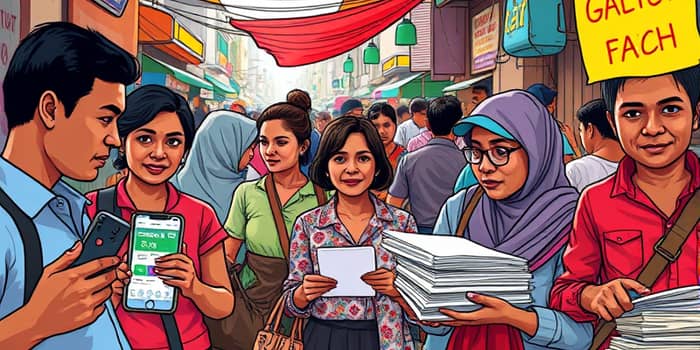
In every corner of our global community, a hidden workforce thrives, powering economies while operating in the shadows of formal systems.
This vast informal economy encompasses activities not covered by regulation, from street vendors to home-based artisans, shaping livelihoods and societies in profound ways.
Understanding its scale and impact is crucial for fostering inclusive growth and addressing the challenges faced by billions worldwide.
As we delve into this complex landscape, we uncover not just statistics, but human stories of resilience, struggle, and hope.
By exploring its drivers and effects, we can chart pathways toward a more equitable and sustainable future for all workers.
Understanding the Informal Economy
The informal economy refers to economic activities that lack formal arrangements like taxation or social protection.
It includes both unregistered enterprises and jobs without contracts, forming a significant part of the market economy that often goes unrecorded.
This sector is distinct from the formal economy, as it operates largely outside government monitoring and contributes to GDP in ways that are frequently underestimated.
For instance, countries like Italy have seen boosts in GDP estimates by incorporating informal activities, highlighting its economic importance.
Recognizing this duality helps us appreciate the informal economy's role in providing livelihoods where formal opportunities are scarce.
Global Reach and Impact
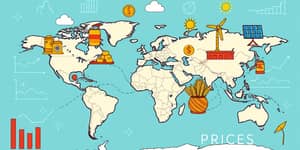
Globally, the informal economy employs about 2 billion workers, representing 60% of the world's employed population.
This vast workforce is concentrated in low and middle-income countries, where it can account for up to 80% of jobs in some regions.
In advanced economies, it still contributes 15-35% of economic activity, showing its pervasive nature across development stages.
The sector is dominated by agriculture, retail, and repair services, often involving low-productivity and subsistence work.
Women are disproportionately represented, facing gender norms that push them into unpaid or home-based roles with fewer protections.
- Nearly 2 billion workers are engaged in informal employment worldwide.
- In Africa, informal jobs can make up 40-80% of the economy, including agriculture.
- Latin America sees over 50% of new jobs created in the informal sector.
- Developed countries have around 15% informal economic activity, though this varies.
- Measurement relies on labor force surveys and ILO data, covering over 100 countries.
This scale underscores the informal economy's critical role in job creation and economic resilience, especially in developing regions.
Why Does Informality Exist?
Drivers of the informal economy are multifaceted, ranging from structural factors to individual choices.
Macro-level causes include insufficient formal job creation amid population growth and economic crises.
Weak institutions, such as high regulatory barriers and corruption, also push people into informality.
On a micro level, individuals may be excluded due to poverty, lack of education, or financial constraints.
Others choose informality for benefits like tax evasion, flexibility, or higher net earnings, despite the risks.
- Involuntary drivers: No formal jobs available, exclusion from opportunities.
- Voluntary drivers: Desire for independence, circumvention of regulations.
- Structural drivers: Globalization, economic liberalization, informalization of jobs.
- Social norms: Gender roles that limit women's access to formal employment.
- Entry barriers: High costs of formalization, discrimination in labor markets.
Understanding these drivers helps in crafting targeted policies to support transitions to formality.
This table summarizes key drivers, illustrating the complex interplay of factors that sustain the informal economy.
Consequences for Society
The effects of the informal economy are both profound and dual-natured, with significant implications for development.
On the negative side, it reduces the tax base and hampers sustainable growth by keeping firms small and unproductive.
Informal workers often face vulnerability without social protection, leading to higher poverty risks and unfair competition for formal businesses.
Gender disparities are exacerbated, as women in informal roles earn less and have fewer rights, perpetuating cycles of inequality.
However, there are positive aspects, such as job creation in regions with limited formal opportunities and low entry costs that aid subsistence.
- Economic downsides: Reduced GDP potential, limited access to finance for informal enterprises.
- Social challenges: No contracts or legal rights, increased poverty vulnerability.
- Benefits: Provides livelihoods where formal jobs are absent, offers flexibility for some workers.
- Long-term impacts: Creates a "long shadow" that prevents formalization and entrenches economic duality.
- Emerging issues: Digital platforms are expanding informality, blurring lines between formal and informal work.
Balancing these consequences requires nuanced approaches that address both the drawbacks and the essential roles informality plays.
Pathways to Formalization
Transitioning to a more formal economy involves comprehensive strategies that incentivize change while protecting workers.
Key policies include simplifying labor regulations and reducing bureaucracy to lower the costs of formalization.
Digital platforms can enhance financial inclusion, providing access to banking for unbanked populations, especially women and SMEs.
The WIEGO framework emphasizes four pillars: creating formal jobs, regulating informal enterprises, extending protections, and raising productivity.
Addressing root drivers through education and finance access is crucial for sustainable transitions.
- Incentives: Lower taxes, streamline registration processes to encourage formal business operations.
- Protections: Extend social security and legal rights to informal workers to reduce vulnerability.
- Support systems: Improve access to capital and training for skills development.
- Enforcement: Strengthen institutions to prevent informalization of formal jobs.
- International cooperation: Leverage ILO recommendations and UN approaches for global best practices.
These pathways offer practical steps for policymakers and communities to foster inclusive economic growth.
Future Challenges and Opportunities
Looking ahead, the informal economy faces evolving challenges linked to technology, climate change, and post-COVID recovery.
Digital platforms are creating new forms of non-standard employment, expanding informality in ways that require adaptive regulations.
Gender and climate linkages are emerging, as informal workers, often women, are disproportionately affected by environmental shifts.
Measurement remains a hurdle, with variations in data collection across countries complicating global assessments.
Despite this, opportunities exist to harness informality for innovation, such as through community-based initiatives that blend formal and informal elements.
- Technological shifts: Rise of gig economy platforms increasing informal work arrangements.
- Sustainability issues: Informal sectors' role in climate adaptation and mitigation efforts.
- Data gaps: Need for better integration of informal economy estimates into national accounts.
- Regional insights: Case studies from Africa and Latin America showing declines in some areas.
- Policy debates: Balancing voluntary versus involuntary informality in strategy development.
By addressing these challenges, we can build resilient economies that value all forms of work and promote shared prosperity.
Embracing the informal economy not only acknowledges its scale but also unlocks potential for transformative change.
Let us move forward with compassion and action, ensuring that no worker is left behind in the pursuit of a fairer world.
References
- https://www.imf.org/en/publications/fandd/issues/2020/12/what-is-the-informal-economy-basics
- https://en.wikipedia.org/wiki/Informal_economy
- https://www.weforum.org/stories/2024/06/what-is-the-informal-economy/
- https://journals.sagepub.com/doi/10.3233/SJI-240058
- https://data.undp.org/insights/informal-economy
- https://www.oecd.org/en/publications/tackling-vulnerability-in-the-informal-economy_939b7bcd-en.html
- https://www.wiego.org/informal-economy/
- https://ec.europa.eu/eurostat/statistics-explained/index.php/Building_the_System_of_National_Accounts_-_informal_sector
- https://databank.worldbank.org/metadataglossary/gender-statistics/series/SL.ISV.IFRM.FE.ZS