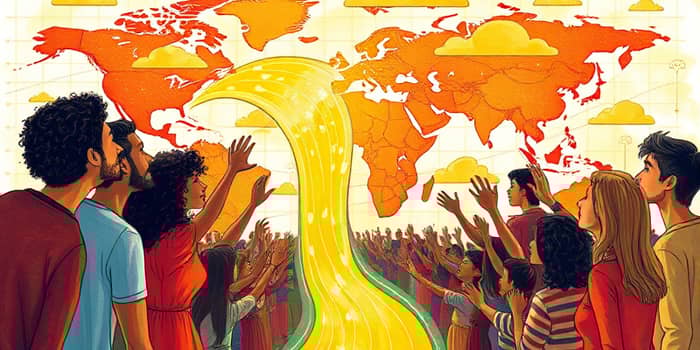
As billions of dollars prepare to change hands over the coming decades, families and economies face a turning point. The largest financial shift in modern history is underway, transforming how wealth is preserved, shared, and invested. Understanding this unprecedented transfer can empower individuals and communities to shape a more equitable and prosperous future.
Understanding the Great Wealth Transfer
The term “Great Wealth Transfer” describes a massive intergenerational handover of assets from Baby Boomers and the Silent Generation to younger heirs, spouses, and charities. Experts estimate that in the United States alone, more than $84 trillion will pass from older households by 2045. Globally, transfers may exceed $80 trillion over two decades, reshaping capital flows and investment priorities.
While headlines focus on staggering numbers, the true story lies in the human dynamics—conversations about legacy, shared values, financial literacy, and strategic planning. This moment offers an unparalleled chance to foster collaboration across generations and unlock new avenues for growth.
Key Statistics and the Generational Landscape
To grasp the scope, consider how each generation fits into this narrative:
The concentration of wealth is striking: the top 1% of U.S. households hold 25% of all assets, and high-net-worth families represent half of the projected transfers. Yet, only one in five Americans has received or expects an inheritance, highlighting deep disparities.
Economic and Social Implications
Beyond family boundaries, the Great Wealth Transfer will influence markets, philanthropy, and social equity. New owners often prioritize values—ESG investing, community development, and sustainable enterprises—leading to lower capital costs for social impact projects.
- Asset growth drives the shift, notably in real estate and equities.
- Demographic shifts amplify housing and retirement needs among younger generations.
- Tax policies offer exemptions but face potential reform, altering future liabilities.
- Global debt burdens and economic cycles shape timing and scale of distributions.
Governments and financial institutions must adapt to these changes, balancing fiscal stability with incentives for productive investment. Meanwhile, charities stand to gain substantial support, if donors align giving strategies with long-term goals.
Planning Strategies for Givers
Families can turn uncertainty into opportunity by adopting proactive measures. Expert advisors recommend a clear roadmap:
- Clarify long-term goals and values—discuss personal wishes, family missions, and philanthropic priorities.
- Organize estates and legal documents—wills, trusts, powers of attorney, and healthcare directives.
- Leverage tax exemptions and deductions—plan gifts, annual exclusions, and use lifetime exclusions efficiently.
- Maintain open communication channels—reduce conflicts by sharing information and expectations early.
For business owners, succession planning is critical. Less than 40% of family enterprises have formal strategies, endangering legacies. Engaging advisors, training successors, and aligning management structures can ensure continuity and preserve relationships.
Planning Strategies for Receivers
Heirs and beneficiaries must prepare for new responsibilities. Receiving wealth often brings complex tax considerations and emotional challenges. Key steps include:
1. Seek professional guidance to understand potential liabilities and reporting requirements.
2. Develop financial literacy, focusing on investment basics, risk management, and budgeting.
3. Establish personal goals to align inherited assets with life plans—whether starting a business, funding education, or supporting community projects.
By taking ownership of financial education and fostering transparent dialogue with givers, recipients can optimize their inheritance and contribute meaningfully to family legacy.
Challenges and Risks Ahead
Despite its promise, the transfer poses significant hurdles. Wealth concentration may deepen inequality unless offset by inclusive policies and philanthropic innovation. Many givers lack comprehensive plans, risking disputes and tax inefficiencies.
The so-called “sandwich generation” faces mounting caregiving costs alongside retirement savings gaps. Unprepared households could strain social safety nets and limit intergenerational mobility.
Moreover, potential tax code changes could reduce exemptions or introduce new levies on large estates, increasing uncertainty. Stakeholders must monitor legislation and adjust strategies accordingly.
Embracing Opportunity: A Call to Action
The Great Wealth Transfer is more than a financial event—it is a catalyst for renewal. By adopting strategic wealth planning approaches and fostering cross-generational collaboration, families, businesses, and communities can build a legacy rooted in purpose.
Take the first step today: initiate open conversations, assemble a team of advisors, and draft a vision for how assets can fuel innovation, philanthropy, and social progress. When guided by shared values, this historic transfer can become a force for collective advancement, empowering new generations to lead with intention and compassion.
References
- https://en.wikipedia.org/wiki/Great_Wealth_Transfer
- https://www.rbfcu.org/learn/article/wealth-management-great-wealth-transfer
- https://www.ubs.com/microsites/nobel-perspectives/en/latest-economic-questions/economics-society/articles/how-to-prepare-for-wealth-transfer.html
- https://www.glenmede.com/insights-private-wealth/the-great-generational-wealth-transfer/
- https://www.comerica.com/insights/wealth-management/wealth-preservation/great-wealth-transfer.html
- https://www.weforum.org/stories/2025/09/great-wealth-transfer-economic-growth/
- https://www.first.bank/Resources/Learn/Financial-Education-Center/May-2025/The-Great-Wealth-Transfer-What-It-Means-for-Family
- https://www.cfainstitute.org/insights/articles/great-wealth-transfer-myths-reality
- https://www.ml.com/articles/great-wealth-transfer-impact.html