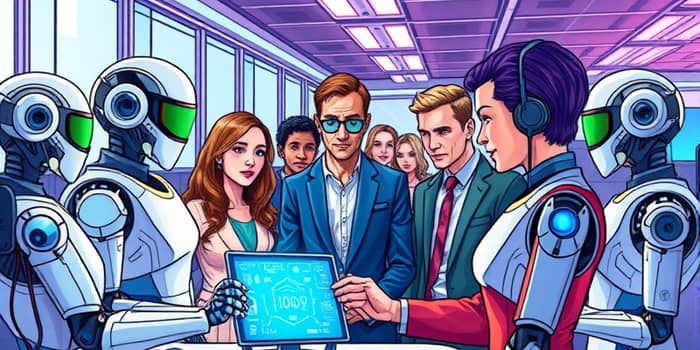
As 2026 approaches, organizations stand at a crossroads where cutting-edge automation meets the timeless strengths of human judgment. This is not a tale of machines replacing people, but rather of a new era defined by partnership. By embracing both innovation and empathy, businesses can unlock unprecedented resilience and creativity.
Automation's Shift from Tasks to Orchestration
In the past decade, automation focused on discrete tasks—processing invoices, routing tickets, or updating records. Today, we witness a revolutionary evolution: enterprise-wide orchestration and systems of action driven by agentic AI systems that reason across diverse workflows. The classic ERP record-keeping model transforms into a dynamic command center that anticipates change and adapts processes in real time.
Imagine an AI agent monitoring supply fluctuations, adjusting production schedules, and coordinating logistics without human intervention on routine steps. This level of orchestration not only boosts efficiency but lays the foundation for context-aware resilience, ensuring that critical operations remain stable amid market disruptions.
Amplifying Human Expertise with AI Collaboration
Far from rendering human skills obsolete, AI empowers experts to focus on higher-value activities. By handling anomaly detection, diagnostics, and repetitive triage, digital copilots free talented professionals to engage in strategic thinking and creative problem solving. Organizations that champion human-AI collaboration at its core observe a surge in innovation velocity and employee satisfaction.
Natural-language interfaces democratize automation for nontechnical users, allowing sales teams to generate forecasts and HR departments to resolve policy queries without coding. As a result, teams across functions experience fewer handoffs and enjoy seamless support through unified AI-driven service ecosystems.
Overcoming Challenges in a Hybrid Workplace
Transitioning to this hybrid model is not without its hurdles. Leaders must navigate governance gaps, shadow AI risks, and growing concerns about job displacement. Without clear policies and oversight, fragmented tools spawn security vulnerabilities and data silos. Moreover, many employees resist change when reskilling opportunities lag behind technology upgrades.
- Shadow AI adoption without official governance
- Skills shortages in AI literacy and data analysis
- Cultural dissonance between technologists and frontline teams
- Layoffs outpacing long-term productivity gains
Organizations that ignore these issues risk undercutting trust and squandering the very gains automation was meant to deliver.
Unlocking Opportunities Through Resilience and Learning
Amid these challenges lie transformative opportunities. By prioritizing resilience over efficiency alone, companies can build adaptive processes that thrive under pressure. Comprehensive reskilling programs foster hybrid talent—professionals adept at both business strategy and technical fluency.
- Continuous learning embedded into daily workflows
- Unified support portals integrating IT, HR, and finance
- Ethical frameworks to govern agentic decisions
Real-time visibility into operations empowers leaders to anticipate issues, allocate resources dynamically, and cultivate a culture of shared ownership and accountability.
Predictions for Work in 2026
The workplace of 2026 will be defined by how well humans and AI integrate. We foresee AI evolving into both an organizational operating system and virtual teammate. Adoption metrics—such as active usage, time to resolution, and user satisfaction—will overshadow traditional deployment KPIs.
- Domain-specific agents delivering up to 35% higher impact than generic assistants
- AI integrated as a formal member of organizational charts
- Governance shifting from policy manuals to embedded model workflows
- Enterprises valuing resilience metrics over mere hours saved
Leaders who focus on adoption, ethics, and continuous improvement will outpace competitors locked into legacy efficiency targets.
Charting a Path Forward
To thrive in this new reality, organizations must champion both technology and humanity. Start by aligning AI initiatives with clear business outcomes and investing in comprehensive upskilling. Embed governance into operational workflows and measure success by adoption, trust, and resilience rather than cost savings alone.
Encourage cross-functional teams to co-design automation solutions. Celebrate quick wins that reduce friction and build momentum. Regularly review ethical guardrails to maintain transparency and accountability. By doing so, leaders reinforce a culture where innovation flourishes and employees feel empowered.
Conclusion: Embracing the Human Element
The future of work is not a zero-sum contest between people and machines. Instead, it is a collaborative journey where autonomous AI elevates human potential. When organizations balance technological prowess with empathy, they unlock a virtuous cycle of creativity, resilience, and sustainable growth.
As we move toward 2026, let us remember that the most transformative innovations spring from human imagination guided by intelligent tools. By nurturing this partnership, we ensure that the workplace remains a source of purpose, possibility, and progress for everyone.
References
- https://www.redwood.com/article/ai-automation-trends/
- https://www.moveworks.com/us/en/resources/blog/digital-workplace-trends-shaping-enterprises
- https://www.automateshow.com/blog/automation-tips-and-trends-for-2026-how-to-plan-your-next-move
- https://www.prsa.org/article/6-workplace-trends-shaping-2026-jan26
- https://hbr.org/2026/02/9-trends-shaping-work-in-2026-and-beyond
- https://www.deloitte.com/us/en/insights/topics/technology-management/tech-trends.html
- https://ivyexec.com/career-advice/2026/workplace-trends-for-2026-preparing-for-the-new-labor-market-reality