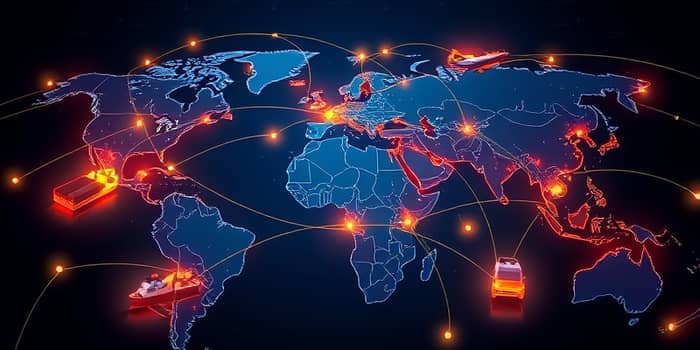
In 2026, the global logistics landscape faces unprecedented volatility from geopolitical tensions, inflationary pressures, and climate disruptions. To thrive, businesses must embrace investing in connectivity as the linchpin of their supply chain strategies. By combining cutting-edge technologies with resilient multimodal networks, shippers and carriers can navigate uncertainty and seize growth opportunities.
Market Landscape and Freight Modes Outlook
After years of recovery, the industry has entered a restructuring phase with balanced capacity across modes but uneven demand by region. While Asia-Pacific surges ahead in manufacturing and e-commerce, Europe emphasizes sustainability and North America accelerates tech adoption.
Freight mode projections for 2026 highlight diverse challenges and growth drivers. Companies must tailor strategies to each mode’s dynamics, from ocean shipping cycles to last-mile parcel complexities.
Key Trends Driving Connectivity Investments
The accelerating pace of technology adoption has placed digital platforms and data analytics at the core of logistics transformation. Companies that harness advanced cloud computing solutions and real-time data networks will achieve greater visibility, predictive power, and operational agility.
- Digital freight marketplaces for rate comparison and capacity matching
- AI for demand forecasting, route optimization, and risk prediction
- Location intelligence combining traffic, weather, and GPS data
- Cloud-based WMS/TMS for instant collaboration across partners
As one executive noted, “Success in 2026 will depend on visibility, flexibility, and strategic planning, rather than reactive decision-making.”
Automation, Sustainability, and Resilience
Warehouse robotics and autonomous vehicles continue to address labor shortages and boost throughput. Leading organizations deploy predictive analytics and AI to solve bottlenecks before they arise, while parcel carriers leverage machine learning-based sorters for peak season surges.
Environmental and regulatory pressures demand investments in alternative fuels, carbon reporting, and route redesign. By embracing sustainable fuel and route optimization, shippers can meet emissions targets while lowering long-term costs.
Building resilience means diversifying routes, carriers, and modes. Establish contingency playbooks that include multi-carrier agreements, buffer stock strategies, and dynamic re-routing protocols. “You cannot avoid the disruption—it will come your way,” warns Guillaume Bournisien, Geodis.
Risks and Disruptions Shaping Strategy
Geopolitical conflicts and trade barriers can instantly reroute freight lanes. Companies must expand supplier bases, nearshore critical components, and maintain strategic inventories to cushion impacts.
Rising cyber threats target connected systems, making robust security essential. Simultaneously, extreme weather events threaten infrastructure and fleets. Integrate climate risk modeling into planning processes and secure adequate insurance coverage.
Regional Investment Opportunities
While opportunities abound globally, each region presents its own set of dynamics that dictate investment choices.
- Asia-Pacific: Invest in digital platforms to unlock efficiency amid infrastructure constraints and e-commerce growth.
- Europe: Leverage connectivity to navigate complex cross-border regulations and achieve sustainability compliance.
- North America: Scale last-mile AI and robotics to contain rising delivery costs and meet consumer expectations.
- Emerging Markets: Build cloud-based, multi-hub networks to bridge infrastructure gaps and support trade expansion.
The Path Forward
Connectivity is not a single investment but a holistic mindset. It requires integrating digital platforms, AI-enabled visibility tools, and robust multimodal links into a unified ecosystem. As Dean Croke of DAT iQ observes, “Shippers aren’t buying a discount, they are buying risk.” By focusing spend on systems that anticipate change rather than react to it, organizations can transform volatility into competitive advantage.
The year 2026 will test supply chains at every turn. Those that commit to end-to-end digital visibility, strategic resilience planning, and sustainable operations will not only survive disruptions but emerge stronger. The future of global logistics belongs to those bold enough to invest in connectivity today.
References
- https://www.icontainers.com/global-logistics-market-trends-2026/
- https://www.transvirtual.com/us/blog/global-supply-chain-trends-in-logistics/
- https://www.supplychaindive.com/news/2026-logistics-outlook-ai-bankruptcies-ocean-air-last-mile-rail-trucking-operational-volatility/810429/
- https://kpmg.com/se/en/insights/2026/supply-chain-trends-2026.html
- https://wwexgroup.com/shipper-resources/2026-shipping-industry-report/
- https://www.ascm.org/making-an-impact/research/top-10-supply-chain-trends-in-2026/