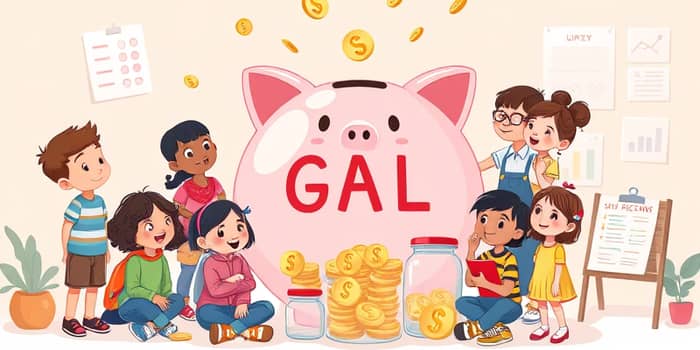
Introducing children to basic money concepts is one of the most impactful gifts families and educators can offer. By building a strong foundation for financial security early in life, young people develop skills that extend beyond dollars and cents. They learn to weigh trade-offs, envision future goals, and build confidence in managing resources as they grow. This article explores why early financial literacy matters, the current educational landscape, essential topics for each age group, and effective strategies and policies to make learning stick.
Why Early Financial Literacy Matters
Research shows that most adults look back wishing they had more money education in high school. Only 19% of U.S. adults report taking a personal finance class, yet nearly 8 in 10 believe they would have a better start with money if they’d learned more about budgeting, saving, and debt management earlier. More than 72% say they would have made fewer money mistakes, and 73% believe they’d be further ahead financially today. About 71% say they’d experience less stress around money, while nearly one in three adults often feel overwhelmed by financial worries.
Younger generations also grapple with misconceptions and anxiety. In a 2025 survey, 42% of teens were “terrified” they won’t have enough money for future goals, and 68% thought saving for retirement could wait. Forty-three percent mistakenly viewed an 18% interest rate as manageable, and 80% had never heard of a FICO credit score or understood its purpose. When teens receive money, only 36% save for the future, 23% save for education, and just 13% invest, underscoring the need for early intervention.
Today’s youth face financial landscapes far more complex than past generations. They juggle digital banking platforms, automated investment apps, student loan decisions, and emerging payment technologies—systems that evolve faster than most curricula can keep pace with. At the same time, total U.S. student loan debt reached a record $1.814 trillion in 2025, a reminder that young people face long-term obligations even before their careers begin. Addressing these challenges head-on can help students build confidence, make informed choices, and avoid costly mistakes down the road.
Current Landscape of Financial Education
Efforts to bring financial education into schools have gained traction, but significant gaps remain. As of August 2025, 29 states guarantee a standalone personal finance course for public high school students. Yet only 10 of the 27 states with such mandates have fully implemented these courses, leaving 17 still working to translate policy into practice. In states like Utah and Virginia, nearly 100% of students access financial literacy classes, while in California just 0.8% do—and in Nevada and Delaware, access levels are only 4.2% and 6%, respectively.
Generational data reveal who gets classroom financial training: 35% of Gen Z took a personal finance course, compared with 24% of Millennials, 16% of Gen X, and only 10% of Baby Boomers. Adults who had a high-school personal finance class are five times more likely to say they graduated fully prepared to handle money in the real world. Despite this, many consumers still learn about money at home—38% cite family as their primary teacher, while only 15% credit schools for their financial understanding.
Support for improved financial education runs high across demographics. Nearly half of parents of K–12 students want additional funding for economic and personal finance courses, and around 75% across political identities view such classes as essential. Sixty-one percent of young adults (18–29) say reducing financial stress or anxiety is one of the most valuable outcomes of personal finance education—proof that public and parent support can help drive meaningful change.
What to Teach at Different Ages
Designing age-appropriate financial lessons helps children absorb concepts that match their developmental stages. From simple coin recognition to exploring credit scores, educators and parents can scaffold learning so each new skill builds on the last. Below are core topics broken down by age group, with practical examples to bring each idea to life.
- Recognizing coins and bills: children learn currency names and values through play.
- Exchanging money to buy items: hands-on activities with pretend stores.
- Making choices between different purchases: understanding trade-offs early on.
- Saving coins for small goals: jars or envelopes encourage habit formation.
- Distinguishing needs from recreational wants: real examples like snacks versus toys.
Introducing these concepts between ages 3 and 7 sets the stage for a healthy money mindset from an early age. When children see saving as a game and understand that every child faces choices, they build confidence and lay groundwork for more advanced topics.
- Setting short, medium, and long-term goals: toy today versus bike next year.
- Building simple spending and saving plans: mapping income to expenses.
- Opening a child savings account: observing interest even if it’s small.
- Introducing earning through age-appropriate chores: learning that work yields payoff.
- Understanding interest on loans and deposits: laying groundwork for future credit.
Between ages 8 and 12, tweens can grasp more abstract ideas like budgeting and goal setting. They often respond well to visual tools—color-coded spreadsheets, charting progress toward a new bike, or savings challenges among peers. Real-world experiences, such as opening a savings account or earning allowance, reinforce lessons and encourage responsibility before entering the teenage years.
- Creating and tracking a personal budget: managing income from jobs and side gigs.
- Exploring banking and digital money tools: checking, savings, mobile payments, and security.
- Understanding credit, interest, and debt: why 18% APR is rarely manageable.
- Learning about FICO scores and reports: why credit history matters.
- Savings, investing, and retirement basics: the power of compounding early.
As teens approach adulthood, practical money skills become critical. Budgeting supports responsible spending on items like phone plans and social activities, while saving and investing teach them to think decades ahead. A pay yourself first savings technique—automatically diverting a percentage of earnings into savings—can reinforce the habit of saving before spending. Understanding the pitfalls of high-interest debt, credit card minimum payments, and how scores influence loan costs empowers young adults to make wise borrowing decisions. Addressing the 68% of teens who think retirement saving can wait—and the 80% unfamiliar with credit scores—is essential. Programs that simulate real bank accounts or stock market games can bridge the gap between theory and practice, making abstract financial principles tangible.
Strategies, Tools, and Policy Actions
Effective teaching goes beyond lectures. Experiential methods—games that mirror market dynamics, simulations of bill payments, or classroom economies—provide experiential learning through real tasks. Technology plays a powerful role, too, with interactive apps, virtual reality scenarios, and online platforms that adapt to each learner’s pace. Parents and community volunteers can extend lessons at home, turning grocery trips into budget exercises or chore charts into mini-entrepreneurial ventures. To support educators, schools need curriculum frameworks, professional development, and dedicated time in crowded schedules. Policymakers can help by tying funding to clear learning outcomes and closing the gap between mandates and implementation.
Building early financial literacy is a shared responsibility—families, schools, and policymakers all have a role. When children master basic concepts, progress to real-world applications, and gain support from both teachers and parents, they develop lifelong money confidence and peace of mind. With emerging challenges like digital banking innovations and record student loan balances, these skills are more important than ever. By weaving financial education into everyday experiences and ensuring equitable access, we can empower the next generation to make informed choices, avoid costly mistakes, and pursue their goals with assurance.
References
- https://jausa.ja.org/news/press-releases/more-teens-are-participating-in-financial-literacy-courses-but-gaps-in-learning-evident-according-to-new-survey
- https://petersenhastings.com/the-financial-literacy-crisis-in-america-2025-report/
- https://www.intuit.com/blog/global-stories/financial-literacy-ranking-by-state/
- https://www.aba.com/about-us/press-room/press-releases/new-survey-americans-support-financial-education-in-schools
- https://www.weforum.org/stories/2025/07/financial-education-students-to-parents/
- https://www.nefe.org/news/2025/10/poll-financial-education-considered-an-essential-subject.aspx
- https://www.aecf.org/resources/2025-kids-count-data-book
- https://www.thenationsreportcard.org