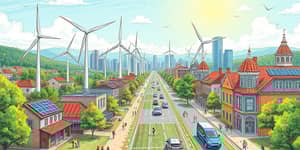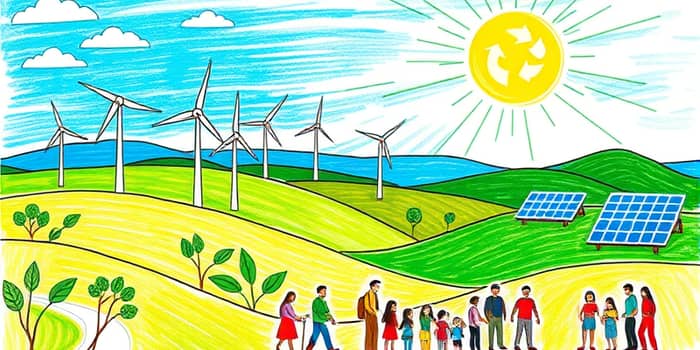
Imagine a world where communities thrive side by side with flourishing forests, clean rivers and vibrant cities. In this vision, economic progress is not at odds with environmental health. Instead, it emerges from respect for natural limits and investment in human well-being.
Sustainable economies aim to serve people today while preserving opportunities for future generations. By balancing growth with conservation, we can foster equitable prosperity and resilience against global shocks.
Why Economic Sustainability Matters
Our society stands at a critical crossroads. Traditional growth models often sacrifice ecological integrity and social equity for short-term gains. This approach has led to depleted resources, economic volatility and widening inequality.
Economic sustainability reframes success as long-term vitality rather than fleeting profit. It emphasizes maximizing well-being with minimal resources and acknowledges that enduring prosperity depends on healthy ecosystems and empowered communities. When economic, environmental and social goals align, resilience becomes achievable.
Key Principles and Strategies
Building a sustainable economy requires intentional design across sectors. Leaders must adopt holistic frameworks that integrate environmental stewardship, social justice and financial soundness. Below are core strategies to guide this transformation:
- comprehensive resource conservation plans that safeguard water, energy and raw materials
- relentless innovation and operational efficiency to reduce waste and boost competitiveness
- mainstream circular economy principles enabling repair, refill and reuse systems
- measurable goals and transparent metrics aligned with the UN Sustainable Development Goals
These strategies empower businesses and governments to set clear targets, monitor progress and continuously improve. By investing in green building materials, carbon-neutral processes and clean energy sources like wind and solar, organizations reduce costs while minimizing emissions.
Trends Shaping 2026 for Resilient Growth
As we approach 2026, several emerging trends promise to accelerate the shift toward resilience. Recognizing these patterns allows stakeholders to seize opportunities and mitigate risks in evolving markets.
- Circular economy mainstreaming through new regulations and incentives in Europe and beyond
- Scaling the blue economy by investing in sustainable fisheries and offshore renewables
- AI-driven planetary health applications that optimize resource use and guide climate adaptation
- Evolution from ESG to GSE placing governance at the core of sustainable value creation
- Expansion of Product-as-a-Service models shifting from ownership to performance-based solutions
These trends catalyze systemic change. Companies embracing PaaS models can reduce waste streams while creating predictable revenue. Meanwhile, AI tools may forecast environmental risks, helping governments allocate resources more effectively.
Examples of Resilient Practices in Action
Real-world case studies demonstrate the power of sustainable choices. From national policy shifts to grassroots innovation, these examples illustrate how resilience can be woven into economic structures.
- Denmark’s energy transformation replaced fossil fuels with renewables, ensuring energy security
- China’s electric mobility expansion accelerated city decarbonization and reduced air pollution
- Texas solar leadership leveraged incentives to scale community-based power generation
- Green building materials adoption in Europe cut construction emissions dramatically
These successes share common threads: bold policy frameworks, strong public-private collaboration and communities united around a shared vision. They show that ambitious targets, backed by concrete action, can yield tangible benefits for people and planet.
Building Blocks for Future-Proof Economies
Resilience demands an integrated approach that bridges sectors and scales. Key enablers include effective governance, financial innovation and active citizen participation.
Essential building blocks:
These pillars interconnect. By harnessing deep public-private partnership frameworks and mobilizing finance for sustainable infrastructure, communities can adapt to climate uncertainties, stabilize markets and enhance social equity.
Overcoming Challenges and Embracing Opportunities
Transitioning to a sustainable economy is complex. Barriers include entrenched interests, policy fragmentation and limited awareness. Yet each challenge offers an avenue for innovation.
Organizations must foster a culture of continuous learning, invest in workforce training and build coalitions across sectors. By embedding sustainability in governance structures and aligning incentives with long-term goals, leaders can drive systemic change that benefits all stakeholders.
Conclusion
The path to a resilient economy is both urgent and achievable. It calls for courage, collaboration and creativity. Whether you are a policymaker, entrepreneur or concerned citizen, your actions matter.
By championing sustainable practices, supporting innovative financing models and advocating for equitable policies, we can shape a future where economic vitality and ecological health reinforce each other. Together, we can create an enduring legacy of prosperity for people and planet.
References
- https://econation.one/sustainable-economy/
- https://www.imd.org/blog/sustainability/economic-sustainability/
- https://www.indeed.com/career-advice/career-development/what-is-economic-sustainability
- https://sustain.ucla.edu/what-is-sustainability/
- https://sustainabilitynews.substack.com/p/10-trends-experts-say-will-define
- https://www.weforum.org/stories/2026/01/wef-davos-coming-together-sustainable-growth-means-rethinking-value/
- https://www.ecomondo.com/en/news-detail/sustainability-what-will-2026-look-like?newsId=6240303
- https://www.masterclass.com/articles/economic-sustainability