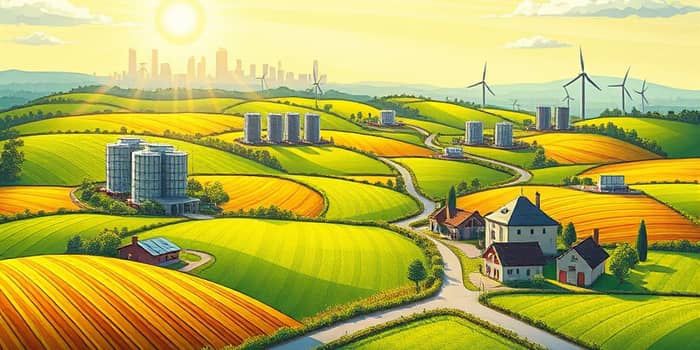
Rural communities across the globe are redefining their economic trajectories, proving that growth and innovation are not exclusive to densely populated urban centers. From unique local strengths in agriculture to cutting-edge data centers powered by renewable energy, non-urban areas are cultivating unique local strengths and assets that fuel both regional stability and national prosperity.
In this detailed exploration, we examine the diverse types of rural regions, key growth drivers, interconnections with urban markets, and emerging opportunities to inspire a collective vision for sustainable development.
Understanding Rural Diversity
Rural areas are not monolithic. Near-city regions benefit from easy access to metropolitan markets and infrastructure, while remote rural areas rely heavily on natural resources like forestry, mining, or specialized tourism. Policy approaches must reflect these differences with tailored policy approaches for each region to maximize impact.
Proximity to urban centers often correlates with higher incomes, younger demographics, and greater access to services. Conversely, remote communities can leverage pristine landscapes and renewable resources, carving niches in eco-tourism or green energy production. Recognizing these distinctions is the first step toward effective development strategies.
STAR Growth Drivers
The OECD’s STAR framework highlights four core drivers of rural resilience. Each driver demands intentional investment and coordination:
- Specific assets: Leveraging tourism, heritage, and agricultural specialties to create local value and identity.
- Tradeable specialisation: Developing export-oriented sectors such as advanced manufacturing, specialty foods, and tech-enabled services.
- Access to urban markets: Building transportation, logistics, and digital links that integrate rural producers into broader supply chains.
- Resources: Exploiting natural endowments for renewable energy projects, sustainable forestry, and water management initiatives.
By concentrating on these drivers, communities can harness export-oriented industries like advanced manufacturing and position themselves for steady, long-term growth.
Unlocking Interdependencies with Urban Areas
Far from being isolated, rural and urban economies are deeply intertwined. A study found that a $1 billion increase in rural manufacturing output can generate a 16% rise in urban jobs through supply chain linkages and consumer spending. This demonstrates the power of integrated rural-urban economic systems to drive mutual prosperity.
Urban dominance in productivity—where metropolitan areas produce over 91% of national GDP—can be balanced by encouraging businesses to expand manufacturing or data services into rural locales. Such strategies reduce congestion, lower costs, and spread economic benefits more evenly across regions.
Emerging Opportunities in 2026 Outlook
Several transformative sectors are ready to reshape rural economies in the coming years:
- Agriculture evolution: Crop rotation shifts toward soybeans as input costs change, with digital farming improving yields.
- AI and digital infrastructure: Hyperscale data centers powered by wind and solar seek sites in rural areas, offering jobs and tax revenues.
- Energy transition: Projects like 3GW battery storage and advanced nuclear facilities promise billions in savings and resilience gains.
These opportunities underscore the potential of renewable energy and green transition to redefine rural prosperity and attract skilled workers.
Overcoming Challenges and Bridging Divides
Despite these prospects, rural areas face real obstacles. Population decline and ageing demographics strain local services. Poverty rates among prime-age workers in rural areas were 9.8% in 2015, compared to 6.8% in urban centers, highlighting persistent inequality.
Educational gaps further widen the divide. With fewer colleges and universities in remote zones, shifting toward a knowledge-driven economy requires substantial investment in training and digital access. Without these, rural workers risk falling behind in a rapidly evolving job market.
Policy Strategies for Sustainable Growth
Effective policy must be multidimensional, combining people-focused measures with infrastructure and regulatory support. Key recommendations include:
- Investing in comprehensive broadband to ensure high-speed connectivity.
- Strengthening vocational training and apprenticeship programs in emerging sectors.
- Establishing regional clusters that link rural enterprises with urban research institutions.
These steps create targeted skills development and entrepreneurship pathways, equipping local talent to lead innovation from their home communities.
A clear example of success is Illinois’ Grid Modernization Act, projected to save $13.4 billion over 20 years by combining nuclear power with 3GW of battery storage. This model demonstrates how affordable housing and lower living costs in rural areas can accommodate workforce expansion in high-value industries.
Key Metrics at a Glance
Building the Path Forward
Rural resilience is not an abstract concept but a living process of adaptation, innovation, and partnership. By embracing renewable energy, digital connectivity, and cross-sector collaboration, communities can secure their futures and contribute to national well-being.
Success hinges on data-driven evidence and reliable coordination among governments, private investors, and local stakeholders. Transparent information, local voice, and agile governance structures ensure that strategies are both responsive and sustained.
Above all, cultivating a collective vision for rural resilience transforms disparate efforts into a unified movement. When small towns, farms, and remote regions see themselves as integral to broader economic systems, the divide between rural and urban fades, and every community thrives together.
References
- https://www.oecd.org/en/publications/reinforcing-rural-resilience_7cd485e3-en.html
- https://unctad.org/news/mirage-global-economic-resilience
- https://commentaries.cberdata.org/1280/urban-growth-dominates-the-us-economy-and-puts-rural-places-at-risk
- https://www.agribusinessglobal.com/markets/americas/cobank-releases-2026-year-ahead-report-forces-that-will-shape-the-u-s-rural-economy/
- https://www.aei.org/economics/5-charts-on-the-economics-gaps-between-urban-and-rural-america/
- https://www.stlouisfed.org/publications/review/2026/feb/agricultural-employment-and-economic-transition-from-malthus-to-solow
- https://southwesternky.com/news/article/rural-vs-urban-living-less-taxing-and-more-relaxing
- https://www.ifad.org/en/w/explainers/how-ifad-is-driving-rural-transformation-in-2026
- https://www.fedsmallbusiness.org/categories/rural-and-urban
- https://heartlandforward.org/pulse/heartland-policy-update-regional-competitiveness-in-2026/
- https://www.federalreserve.gov/econres/notes/feds-notes/changes-in-the-us-economy-and-rural-urban-employment-disparities-20240119.html
- https://www.spglobal.com/market-intelligence/en/news-insights/research/2026/01/top-us-regional-economic-insights-2026
- https://www.goodwill.org/blog/news-updates/six-charts-that-illustrate-the-divide-between-rural-and-urban-america/
- https://milkeninstitute.org/content-hub/research-and-reports/research-and-data-tools/best-performing-cities-2026-resilience-cooling-economy