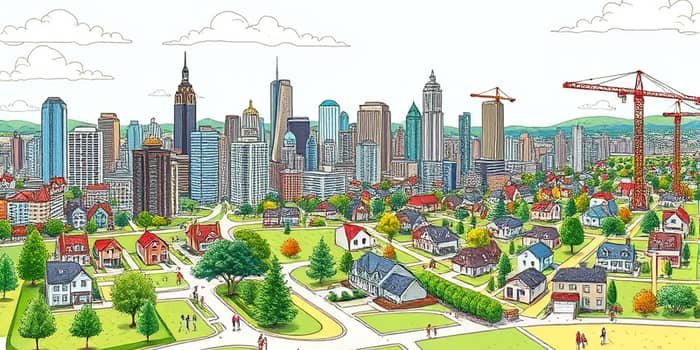
Real estate is often seen as bricks and mortar, but its influence reaches far beyond individual buildings. From city centers pulsing with business activity to quiet suburban streets where families build their dreams, property markets serve as the cornerstone of community prosperity and the backbone of national economic health.
In 2025, commercial real estate contributed a staggering $3.5 trillion to U.S. GDP, supported $1.3 trillion in personal earnings, and sustained over 20 million jobs. These numbers aren’t mere figures—they represent livelihoods transformed, businesses launched, and neighborhoods revitalized. As we look toward 2026, understanding how real estate drives growth and stability can help investors, policymakers, and citizens alike harness its full potential.
Economic Foundations and National Impact
The scale of real estate’s footprint is unmatched. Housing alone accounts for roughly 15–18% of U.S. GDP through new home construction, remodeling, brokerage commissions, and ongoing housing services like rent and utilities. When home values fall by just 5–10%, household wealth declines, consumer spending contracts, and industries from retail to travel experience tangible slowdowns.
Consider this: a $10,000 increase in home value can boost annual household spending by $300–700. That ripple effect supports local businesses, funds educational pursuits, and fuels cultural initiatives. In essence, real estate is a core economic engine of growth that reverberates through every community.
The Dynamics of Commercial Investment
After the pandemic-induced lull, commercial investment is poised for a robust rebound. In 2026, spending is forecast to rise 16% to $562 billion, nearing pre-2020 averages. This surge is driven by income returns and a modest compression of cap rates—signs that investors are regaining confidence in property yields.
Different asset classes present unique opportunities and challenges:
- Office: Prime locations face scarcity by year-end, with major corporations returning and leasing activity surpassing 2019 levels.
- Multifamily: Positive net demand combines with an easing supply overhang, particularly in Sun Belt and Midwest markets.
- Industrial: E-commerce continues to expand, driving 4.5% year-over-year NOI growth.
- Retail: With 97% occupancy rates and 3.4% NOI growth, retail spaces are adapting through experiential offerings.
- Data Centers: Leasing is at record highs, limited by power availability and spurring greenfield growth in low-regulation corridors.
- Healthcare: Construction pullbacks lead to vacancy stabilization and new rent growth potential amid policy shifts.
By aligning investment strategies with each sector’s trajectory, stakeholders can capture value in markets that promise both stability and upside.
Residential Markets and Wealth Effects
Nationally, home prices are expected to stagnate in 2026 after years of rapid gains. Lower adjustable-rate mortgages, borrower incentives, and the lingering wealth effect from past appreciation will help balance supply and demand. Yet regional disparities remain stark: Texas metros may see declines near 30%, while coastal areas oscillate between modest drops and single-digit gains.
For homeowners and prospective buyers, staying informed on local conditions is crucial. Working with trusted brokers, monitoring permit activity, and understanding mortgage rate trends can uncover hidden buying opportunities or signal when to exercise caution. These practices form a multiplying returns on household investments approach that fortifies personal finances.
Challenges, Risks, and Strategies
No market is immune to headwinds. Industry leaders identify several pressing concerns that require proactive planning:
- Interest rate volatility and rising cost of capital
- Labor shortages and escalating operational expenses
- Regulatory changes affecting zoning, construction, and taxation
- Inflationary pressures on materials and consumer spending
- Geopolitical disruptions and tariff uncertainties
Addressing these risks demands collaboration among public and private sectors. Innovative financing models, workforce development programs, and sustainable building practices can mitigate cost increases and enhance long-term resilience. By embedding flexibility into leases and capital structures, owners can adapt swiftly to changing conditions.
Emerging Trends and Opportunities
The property landscape is ever-evolving, and those who anticipate shifts will reap the greatest rewards. Key trends shaping 2026 include:
- AI and data analytics streamlining asset management and tenant engagement
- Conversion of underused office space into mixed-use and residential projects
- Expansion of logistics hubs in the Sun Belt, fueled by affordable land and labor
- Sustainability certifications driving premium rents and capital flows
- Resilient markets like Dallas, Miami, and Brooklyn leading recovery in well-located assets
Investors who embrace technology, sustainable design, and community integration will stand out in a crowded field. Public initiatives that support affordable housing and infrastructure improvements can unlock new corridors of growth, benefiting all stakeholders.
Conclusion: Harnessing Real Estate's Potential
Real estate is more than property—it is a living, breathing force that shapes economies, uplifts communities, and secures individual futures. Whether you are an investor seeking stable returns, a policymaker crafting growth strategies, or a family buying your first home, understanding these dynamics can guide smarter decisions and foster shared prosperity.
By recognizing real estate as a critical lifeline for consumer spending and a source of long-term wealth, we can collaborate to build resilient cities, vibrant neighborhoods, and a robust economy that benefits everyone. The blueprint is clear: strategic investment, risk management, and innovation will ensure that real estate continues to stand tall as a pillar of our economic foundation.
References
- https://www.naiop.org/contributions2026
- https://www.cbre.com/insights/books/us-real-estate-market-outlook-2026
- https://www.lga.cpa/insights/blog/2026-economic-outlook-for-real-estate/
- https://www.pwc.com/us/en/industries/financial-services/asset-wealth-management/real-estate/emerging-trends-in-real-estate-pwc-uli/trends.html
- https://www.dallasfed.org/research/economics/2026/0115
- https://www.jpmorgan.com/insights/global-research/real-estate/us-housing-market-outlook
- https://www.youtube.com/watch?v=by-wwu2ovfA
- https://www.cushmanwakefield.com/en/united-states/insights/trends-to-watch
- https://knowledge.uli.org/en/reports/emerging-trends/2026/emerging-trends-in-real-estate-united-states-and-canada-2026