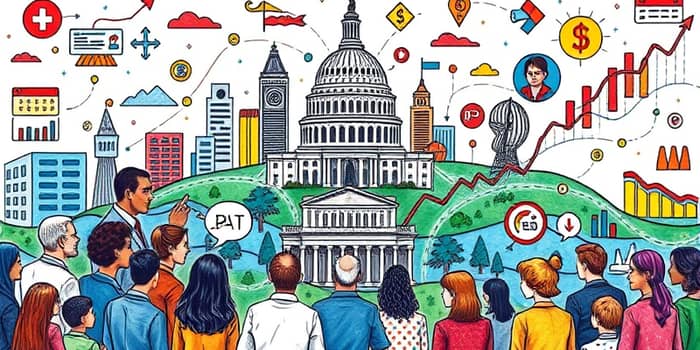
Public policy sits at the intersection of government action and everyday life, determining the pace of economic growth, the resilience of communities, and the health of citizens. By carefully calibrating fiscal, monetary, trade, and social interventions, policymakers can mitigate economic downturns, foster sustainable expansion, and address social inequities. This article explores evidence, mechanisms, and practical guidance to inspire both citizens and decision-makers to craft policies that deliver tangible benefits.
The Fiscal and Economic Foundations
The size and composition of government spending profoundly influence private-sector activity. Research shows that a permanent 1% of GDP increase in government size can lower growth by approximately 0.14%, while larger social outlays may inadvertently subsidize leisure over work. Conversely, strategic expenditure cuts—rather than tax hikes—have proven to boost investment: a 1% cut in primary spending can raise investment by up to 0.80% over five years. These findings underscore the value of targeted fiscal consolidation as a catalyst for long-term prosperity.
Beyond aggregate measures, trade openness, stable monetary regimes, and well-designed safety nets each play a vital role. Countries that embrace international exchange often enjoy higher productivity and standards, whereas excessive policy uncertainty can stall business expansion. The United States, despite facing a projected debt level of 120% of GDP by 2036, still outperforms peers thanks to a balanced mix of openness and prudent monetary policy.
Mechanisms of Policy Impact
Policymakers influence outcomes through distinct channels—spending, taxation, regulation, and data-driven interventions. Understanding these levers allows for more precise design and evaluation. Causal methods like randomized controlled trials and difference-in-differences analyses distinguish genuine policy effects from spurious correlations. For example, studies of minimum wage increases, immigration reform, and environmental regulations have all benefited from robust econometric techniques, producing actionable insights.
Bridging Research and Implementation
Critical to success is the translation of academic findings into actionable programs. Enhanced practitioner-researcher partnerships ensure that cost estimates, scalability assessments, and impact forecasts reach policymakers in an accessible format. New administrative databases—linking tax records, social security filings, and census data—equip analysts with unprecedented precision, enabling real-time adjustments and continuous learning.
Equally vital is addressing methodological gaps. Policy uncertainty remains underexplored, particularly regarding monetary primacy. By integrating survey data on health and labor—such as the Behavioral Risk Factor Surveillance System—researchers can trace the full spectrum of economic shocks, from job displacement to long-term health outcomes, and refine responses accordingly.
Engaging for Change: Practical Steps
- Educate Yourself: Dive into public data portals and policy briefs to grasp current fiscal and social dynamics.
- Advocate Strategically: Support initiatives that emphasize early childhood investments and worker retraining, proven to deliver high returns.
- Participate in Consultations: Engage with local and national forums to voice evidence-based suggestions and share lived experiences.
- Collaborate Across Sectors: Form coalitions between nonprofits, academia, and business to pilot innovative programs.
- Monitor Outcomes: Track key indicators—employment, productivity, health metrics—and hold leaders accountable for results.
A Vision for Inclusive Growth
True progress emerges when policies align economic efficiency with social justice. For low-income and less-educated populations, declines in job security have correlated with deteriorating health outcomes. Programs like Trade Adjustment Assistance and universal grants of $6,000 per adult year not only cushion shocks but can boost GDP by up to 7% within eight years. These initiatives exemplify how well-targeted interventions can yield both human and economic dividends.
Moving forward, it is imperative to champion evidence-based approaches at every stage—from problem diagnosis through implementation and evaluation. By demanding transparency, fostering interdisciplinary collaboration, and leveraging cutting-edge data, communities can ensure that public policy becomes a tool for sustainable growth rather than an inadvertent brake on innovation.
Conclusion: From Analysis to Action
Public policy shapes the economic narrative of nations and the daily lives of citizens. While debates about government size and spending priorities persist, the path to progress is clear: adopt comprehensive administrative databases, refine causal methodologies, and build inclusive coalitions. By doing so, we can craft interventions that not only accelerate growth but uplift health and well-being across society.
Your engagement matters. Whether as a concerned citizen, a researcher, or a policymaker, embracing data-driven insights and advocating for prudent, targeted measures will help build resilient economies and healthier communities. The future of economic outcomes rests in our collective hands—let us shape it wisely.
References
- https://pmc.ncbi.nlm.nih.gov/articles/PMC7467305/
- https://jphmpdirect.com/beyond-guesswork-using-econometric-methods-to-measure-real-policy-effects/
- https://www.heritage.org/budget-and-spending/report/the-impact-government-spending-economic-growth
- https://www.hoover.org/news/economic-consequences-us-fiscal-policy-trends-conference
- https://vc.bridgew.edu/management_fac/23/
- https://www.cbo.gov/topics/economy/economic-effects-fiscal-policy
- https://www.analysisgroup.com/practices/strategy-policy-and-analytics/public-policy-and-economic-impact-analysis/
- https://knowledge.wharton.upenn.edu/article/new-economic-models-can-improve-public-policy/
- https://www.congress.gov/crs-product/R45723