As the world economy steadies after turbulent years, nations must harness the full potential of workforce, technology, and policy to sustain growth. In 2026, forecasts suggest a steady but modest expansion of global GDP. Yet the difference between stagnation and vitality will hinge on one element: productivity.
This article examines key projections, regional contrasts, underlying drivers, and actionable strategies to elevate national output and secure long-term prosperity.
Global GDP Growth Projections
Major institutions project global GDP growth between 2.8% and 3.3% in 2026, a rate below pre-pandemic norms but reflective of resilient consumption and cautious investment. Productivity enhancements will determine whether economies merely limp forward or accelerate toward robust expansion.
Productivity gains from AI and technology currently appear nascent, with broad impacts expected only after targeted investment and reform. Understanding these projections provides context for policy and business decisions worldwide.
Regional Variations
While the global average hovers around 3%, regional strengths and weaknesses diverge. The United States demonstrates notable resilience, China navigates property-market headwinds, and the Eurozone copes with structural obstacles.
- United States: Forecasts range from 1.8% to 2.6%, driven by tax cuts, consumer refunds, and potential AI uptake.
- China: Growth estimates span 4.8% to 6.4%, offset by a -1.5pp drag from the property sector decline.
- Eurozone: Slower growth of 1.1%–1.3%, challenged by demographics, regulation, and global competition.
Productivity Drivers
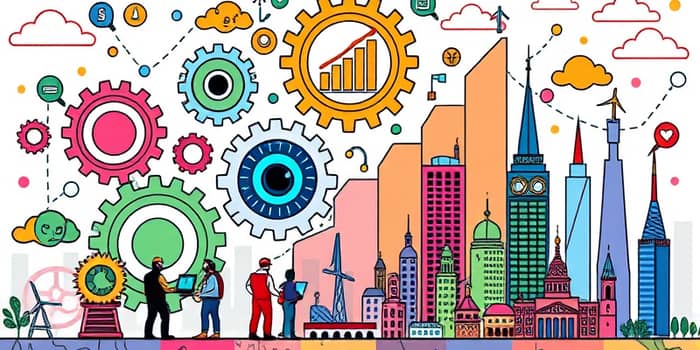
Elevating output requires unlocking efficiencies across sectors. Three primary catalysts stand out:
- AI adoption and investment: From manufacturing to services, AI can boost output per worker if paired with training and infrastructure.
- Digital transformation and renewables: Integrating cloud computing, automation, and green energy reduces costs and enhances resilience.
- Labor market reforms and education: Upskilling programs, flexible regulations, and targeted immigration foster a dynamic workforce.
Labor Market Dynamics
Despite modest GDP expansion, job creation remains subpar in many advanced economies. Immigration slowdowns, aging populations, and skill mismatches constrain labor supply.
Unemployment rates around 4%–5% limit slack but also underscore the need for targeted policies. AI’s current impact on job gains is limited, requiring complementary investments to shift the employment curve upward.
Policy, Inflation, and Risks
Monetary and fiscal settings play a pivotal role in shaping productivity outcomes. Cooling inflation—U.S. core PCE near 2.3% ex-tariffs—opens the door for rate cuts, with the Federal Reserve potentially lowering rates to 3.0%–3.25% by year-end.
Fiscal stimulus, such as $100 billion in U.S. consumer refunds and front-loaded infrastructure spending, provides temporary boosts. Yet long-term gains depend on structural reforms.
Risks from debt burdens, geopolitical tensions, and supply constraints threaten to derail progress. Tariffs and trade wars can hamper productivity by distorting supply chains and raising input costs.
Strategies to Boost Productivity
Policymakers and business leaders must pursue a multifaceted agenda:
- Invest in research and development: Public-private partnerships can accelerate breakthroughs in AI, biotechnology, and clean energy.
- Reform education and training: Vocational programs and lifelong learning initiatives ensure workers adapt to changing technologies.
- Enhance infrastructure: Upgrading digital networks, transportation, and energy grids reduces bottlenecks and spurs productivity.
- Promote competition: Easing regulatory barriers and supporting new entrants fosters innovation and efficiency.
Conclusion
With moderate GDP growth on the horizon, the imperative to boost productivity has never been greater. Nations that embrace AI-driven scenario planning, overhaul labor markets, and commit to sustainable investments will distinguish themselves as engines of global prosperity.
By translating forecasts into coherent strategies, governments, businesses, and communities can ensure that 2026 marks not just another year of growth, but a turning point toward enduring economic vitality.
References
- https://www.goldmansachs.com/insights/articles/the-global-economy-forecast-to-post-sturdy-growth-in-2026
- https://www.morganstanley.com/insights/articles/global-economic-outlook-2026
- https://rsmus.com/insights/economics/economic-outlook-for-2026.html
- https://www.un.org/en/desa-en/5-things-you-need-know-about-global-economy-2026
- https://www.cbo.gov/publication/62105
- https://www.weforum.org/meetings/world-economic-forum-annual-meeting-2026/sessions/global-economic-outlook-af4fed3639/
- https://www.imf.org/en/publications/weo