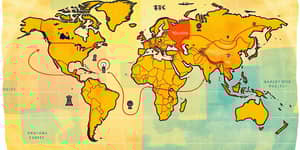
In an increasingly interconnected world, cross-border capital flows offer unparalleled opportunities — but also formidable regulatory challenges. From foreign direct investment screening to emerging sanctions, global investors must chart a careful course through evolving legal frameworks. This guide provides a holistic roadmap to help you anticipate hurdles, implement robust compliance, and unlock growth across more than 40 jurisdictions.
Understanding Foreign Direct Investment Screening
Governments worldwide have tightened inbound review regimes in the name of national security. The United States, United Kingdom, European Union members and Asia-Pacific nations now subject strategic investments to detailed scrutiny.
- US: The Foreign Investment Risk Review Modernization Act (FIRRMA, 2018) expanded CFIUS authority to include critical technologies, infrastructure, and data. Mandatory filings are now required for certain transactions.
- UK: The National Security and Investment Act (2021, effective 2022) introduced a post-Brexit regime with mandatory notification thresholds in sensitive sectors.
- EU: New screening frameworks in the Netherlands, Belgium, Denmark, Luxembourg, Slovakia, Sweden, Estonia, Bulgaria, Romania and Ireland; plus the Foreign Subsidies Regulation (effective July 2023) targeting distortive subsidies.
Across Asia, India’s Make in India initiative and China’s own review mechanisms prioritize domestic champions. Understanding each jurisdiction’s scope, thresholds and timing is essential for risk mitigation.
Managing Outbound Investment Controls
Outbound rules are gaining traction as nations protect emerging technologies. In January 2025, the US Outbound Investment Security Program (OISP) became effective, requiring notifications or prohibiting US persons’ equity or greenfield investments in covered foreign entities involved in AI, semiconductors, quantum computing and advanced hardware.
On December 18, 2025, the 2026 National Defense Authorization Act (NDAA) introduced the COINS Act, extending controls to investments in countries such as Cuba, Iran, North Korea, Russia and Venezuela, and adding high-performance computing, hypersonics and supercomputing to the sector list. A $150 million implementation fund and a public registry of covered persons are planned within 450 days.
In Europe, the January 2025 European Commission recommendation urges member states to screen outbound investments in semiconductors, AI and quantum. Reports are due by June 2026. Proactive monitoring of multilateral coordination — particularly US-EU alignment — forms a cornerstone of strategic planning.
Aligning with Industrial Policies
Industrial incentives and subsidies can reshape competitive dynamics. Investors should map national strategies to identify growth sectors and potential compliance obligations.
- US CHIPS Act: Grants and tax incentives fuel domestic semiconductor production.
- China’s Made in China 2025: Focuses on advanced manufacturing, robotics, aerospace and renewable energy.
- India’s Make in India and the EU Green Deal & European Chips Act: Promote localized green technologies and digital infrastructure.
Understanding domestic subsidy rules and linkages to foreign subsidy screening is critical to avoid retroactive penalties under the EU Foreign Subsidies Regulation.
Complying with Tax, Reporting, and Governance Obligations
Beyond security reviews, investors must navigate complex tax, reporting, antitrust and corporate governance regimes.
Antitrust agencies in the US, EU, China, India and beyond also scrutinize mergers and joint ventures for competition risks. Meanwhile, corporate governance and labor laws — from board composition to data protection and worker rights — demand tailored compliance programs.
Intellectual property and data localization rules are intensifying. The rapid rise of cross-border data flows has driven new restrictions to safeguard sensitive technologies and personal data. Investors should embed robust IP and cybersecurity measures in every transaction.
Addressing Emerging Sanctions and Biotech Restrictions
Sanctions regimes have proliferated, targeting defense, surveillance, biotech and narcotics-related sectors. The NDAA’s BIOSECURE Act will ban US federal contracts with biotechnology firms linked to China, Iran, North Korea and Russia by 2027. Annual updates to the Chinese Military Industrial Complex (CMIC) List further expand the scope.
Investor due diligence must now include real-time sanctions screening, supply-chain audits and contingency planning for sudden asset freezes or divestment orders. Scenario-based stress testing can uncover exposures before they threaten portfolio value.
Key Strategies for Global Investors
A disciplined, proactive approach will be your strongest asset when navigating complex regulations:
- Conduct a comprehensive risk assessment mapping review requirements across jurisdictions and sectors.
- Engage early with regulators — use pre-notification meetings, anonymized guidance requests and Treasury FAQs to clarify uncertain areas.
- Leverage expert resources such as Chambers & Partners’ guides, ICLG/Gibson Dunn analyses and OECD best practices to benchmark compliance frameworks.
- Implement integrated compliance systems: centralize tracking of filing deadlines, screening protocols and reporting obligations to ensure consistency.
- Monitor geopolitical developments and multilateral initiatives — swift adaptation to new EU outbound recommendations or expanded US sanctions can preserve deal value.
By weaving robust compliance into deal origination, due diligence and post-closing integration, investors can transform regulatory complexity into a competitive edge.
Conclusion
The interplay of national security, industrial policy and cross-border oversight is reshaping the global investment landscape. In this era of regulatory fragmentation, strategic foresight and operational excellence are non-negotiable. By mastering FDI screening, outbound controls, reporting obligations and emerging sanctions, global investors can confidently seize opportunities and drive sustainable growth.
As regimes evolve, continuous learning and adaptation will keep you ahead of the curve. Embrace collaboration with regulators, leverage deep legal insights and build resilient compliance frameworks — and you will not only navigate change, but thrive within it.
References
- https://practiceguides.chambers.com/practice-guides/investing-in-2026
- https://www.clearygottlieb.com/news-and-insights/publication-listing/new-guidance-issued-and-changes-underway-for-us-outbound-investment-regime
- https://www.mayerbrown.com/en/insights/publications/2026/01/2026-ndaa-updates-to-outbound-investment-rule
- https://iclg.com/practice-areas/foreign-direct-investment-regimes-laws-and-regulations/usa
- https://www.manaycpa.com/form-be-13/
- https://www.gibsondunn.com/international-comparative-legal-guide-foreign-direct-investment-regimes-2026/
- https://legalinstruments.oecd.org/en/instruments/OECD-LEGAL-0144
- https://store.legal.thomsonreuters.com/en-us/products/proview-international-regulation-of-finance-and-investment-2024-entitlement-43419785
- https://home.treasury.gov/policy-issues/international/the-committee-on-foreign-investment-in-the-united-states-cfius
- https://financing.desa.un.org/document/guidelines-participating-2026-sdg-investment-fair