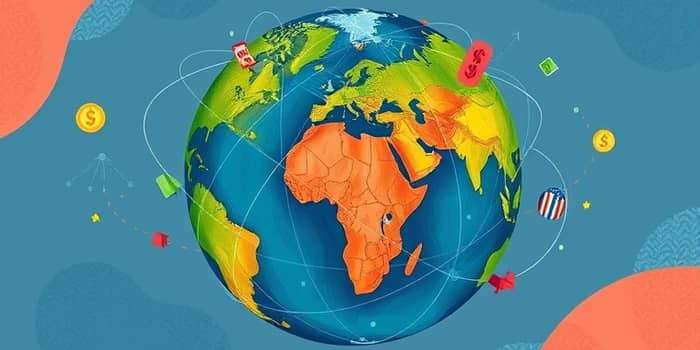
The world in 2026 stands at a pivotal juncture, where the familiar currents of globalization are being reshaped by relentless geopolitical forces.
For investors, this era demands a sharpened focus on understanding the profound shifts that define our times.
Success now hinges on adapting to a landscape marked by intense great power rivalry and a fragmenting international order.
These changes bring both unprecedented risks and hidden opportunities, calling for a proactive and informed approach.
Embracing this new reality can transform volatility into a catalyst for growth and resilience.
This article will guide you through the complexities, offering practical strategies to thrive amidst uncertainty.
The Geopolitical Landscape of 2026
Geopolitical factors are no longer peripheral concerns; they are central drivers of investment outcomes.
The core themes for 2026 revolve around escalating US-China competition, which is redefining global trade and technology dynamics.
This rivalry is fueling a shift toward national security-driven policies, leading to higher market volatility and inflation.
Simultaneously, the global order is fragmenting, with emerging markets gaining influence and challenging established norms.
Investors must prioritize active management and build resilient supply chains to navigate this turbulent environment.
By doing so, they can uncover opportunities in sectors like defense, AI, and critical minerals.
Major Geopolitical Risks to Watch
Understanding specific risks is essential for crafting effective investment strategies.
Here are the key geopolitical risks that will shape 2026:
- US-China Great Power Rivalry: This defines the structural outlook, with competition in AI, semiconductors, and critical minerals intensifying.
- Ongoing Conflicts: From Ukraine to the Middle East, tensions persist, creating instability in key regions.
- Europe Under Pressure: Fragmented politics and economic sluggishness, coupled with defense gaps, pose significant challenges.
- Multipolarity and the Global South: Rising influence of emerging markets often favors China's infrastructure offers, disrupting traditional alliances.
- Other Risks: US political shifts and soaring debt levels at 235% of global GDP could stifle private investment.
Each risk contributes to a volatile setting where traditional approaches may fall short.
Proactive risk assessment is crucial for mitigating potential losses.
Key Trends and Policy Shifts
Beyond immediate risks, several trends are reshaping the geopolitical and economic landscape.
These include:
- State Interventionism: A rise in subsidies and local content mandates, with over 30 new critical mineral facilities expected by 2026.
- Trade Realignment: Tariffs and export controls are replacing WTO norms, disrupting China +1 strategies and global supply chains.
- National Security Focus: Global defense spending is surging, emphasizing protection of AI and critical minerals.
- Economic Impacts: Expect structurally higher inflation and lower growth, with trade and FDI realigning post-globalization.
These trends necessitate continuous monitoring and agile responses from investors.
Staying ahead of policy changes can provide a competitive edge.
Investment Opportunities and Strategies
Amidst the risks, significant opportunities await savvy investors who can identify resilient sectors.
Key areas to focus on include:
- Defense Spending: With budgets increasing globally, companies in this sector are poised for sustained growth.
- AI and Emerging Tech: The race for technological supremacy offers high potential returns for early adopters.
- Critical Minerals: Essential for modern technologies, securing supply chains here is vital for long-term success.
- Biotech and Semiconductors: Driven by geopolitical cycles, these sectors promise innovation and demand.
To capitalize on these opportunities, consider the following approaches:
- Differentiation by Region and Industry: Active management is key to identifying winners in a fragmented world.
- Build Geopolitical Muscle: Develop expertise in capital allocation that accounts for geopolitical factors and market shifts.
- Focus on AI and Cost Control: Leverage technology to manage risks and enhance operational efficiency.
- Supply Chain Resilience: Implement friendshoring and mineral alliances to mitigate disruptions and ensure stability.
Positioning for inflation and growth divergence can yield substantial benefits in this new era.
Regional Priorities and Risks in a Table
To better understand the global landscape, here is a snapshot of key regions and their priorities:
This table highlights the diverse challenges and opportunities across the world, underscoring the need for localized strategies.
Investors should tailor their approaches based on regional dynamics to maximize returns.
Contrasting Viewpoints and Uncertainties
It is important to consider different perspectives and the inherent uncertainties in geopolitical forecasting.
For instance, while many focus on China-Taiwan tensions, it may not be the top risk for 2026, with escalation deemed unlikely.
Conflicts show "uncertain progress" toward resolution, meaning investors must prepare for prolonged instability.
Opportunities abound amid risks; historic structural shifts, perhaps once-per-century, are creating novel winners and losers in the market.
Data as of late 2025 projections indicate that actual 2026 outcomes will depend on factors like elections and negotiations, such as US midterms and China's five-year plan.
Embracing this uncertainty can lead to innovative investment strategies.
Conclusion: Thriving in a Turbulent World
Navigating geopolitical risks in global investment is not about avoiding challenges, but about embracing them with insight and strategy.
By understanding the key trends and risks, focusing on resilient sectors, and adopting active management, investors can turn volatility into advantage.
The future may be uncertain, but with the right approach, it is full of potential for growth and success.
Stay informed, stay agile, and let geopolitical awareness guide your investment journey in 2026 and beyond.
Together, we can build portfolios that withstand the storms and seize the opportunities of our time.
References
- https://www.nb.com/en/link?type=article&name=cio-weekly-perspectives-markets-in-2026-full-speed-ahead-with-eyes-wide-open
- https://www.wellington.com/en-us/institutional/insights/geopolitics-in-2026-risks-and-opportunities-were-watching
- https://www.ey.com/en_mt/insights/geopolitical-outlook-for-2026
- https://time.com/7343169/top-10-global-risks-2026/
- https://www.bcg.com/publications/2025/geopolitical-forces-shaping-business-in-2026
- https://www.lazard.com/research-insights/top-geopolitical-trends-in-2026/
- https://www.stimson.org/2026/top-ten-global-risks-for-2026/
- https://www.weforum.org/publications/global-cybersecurity-outlook-2026/
- https://www.youtube.com/watch?v=dqVfnC_muaI