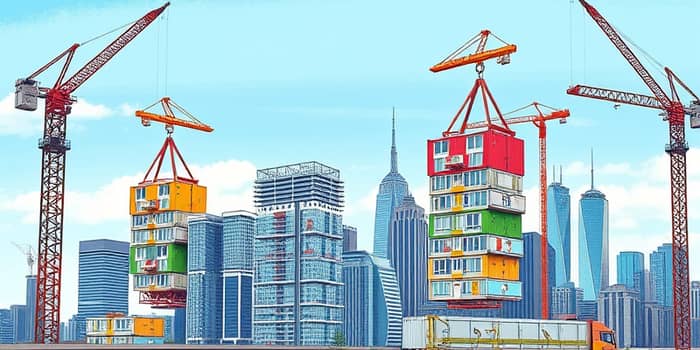
In an era defined by rapid urbanization and evolving investor expectations, modular construction stands as a beacon of innovation. This transformative approach is reshaping the way real estate projects are delivered, offering unprecedented advantages in speed, cost, and quality. For forward-thinking investors and developers, understanding this revolution is essential to unlocking new opportunities and driving sustainable growth.
Understanding Modular Construction
Modular construction involves the off-site fabrication of building sections—known as modules—in a controlled factory production environment. Once complete, these modules are transported to the project location and assembled like pieces of a precise puzzle. Each unit adheres to the same codes and standards as traditional builds, yet arrives ready for seamless integration.
Unlike conventional methods that proceed sequentially on-site, modular construction enables simultaneous site preparation and module fabrication. This parallel workflow lays the foundation for accelerated timelines and predictable scheduling, freeing projects from weather delays and logistical setbacks.
Accelerated Timelines and Financial Returns
One of the most compelling benefits of modular construction is its ability to reduce project durations by 30–50% faster than traditional methods. In practice, a five-over-one multi-unit building can be completed and installed in as little as six to eight months, compared to twelve to eighteen months with stick-built approaches. This time savings translates directly into tens of thousands of dollars in reduced financing and holding costs.
For real estate investors, quicker completion means earlier occupancy and immediate rental income. By mitigating market cycle risk and shortening payback periods, modular projects offer a more agile path to return on investment.
- Simultaneous site and factory workflows
- Weather-independent production schedules
- Streamlined logistics and transportation
- Reliable milestone forecasting
Cost Efficiency and Investment Appeal
Modular construction also delivers substantial cost savings, often achieving 10–20% lower construction costs compared to conventional builds. In large-scale applications, total project cost reductions can reach 20–35% when leveraging volume discounts and optimized processes.
Key drivers of these savings include:
- Bulk material purchasing and economies of scale
- Reduced waste through factory precision cutting
- Lower labor costs with fewer on-site workers
- Shorter schedule leading to decreased financing fees
These efficiencies support higher margins and stronger ROI, making modular projects increasingly attractive for institutional and private investors alike.
Quality Control and Sustainable Design
In a factory setting, every module undergoes rigorous QA/QC protocols. Independent inspections and real-time monitoring ensure that each component meets exacting standards, resulting in fewer defects and minimized rework. The end result is a structure with enhanced durability and lower maintenance costs over its lifetime.
Moreover, modular construction reduces environmental impact. By producing modules in a controlled space, waste is meticulously tracked and recycled, leading to significantly less construction waste on site. Many manufacturers also employ energy-efficient materials, resulting in buildings that are more airtight and thermally optimized. These features not only lower operational expenses but also position modular developments as strong candidates for green building certifications.
Applications and Market Opportunities
Modular construction’s versatility extends across diverse asset classes, from single-family residences to large-scale commercial complexes. Key applications include:
- Residential and multifamily housing, including affordable units
- Hospitality projects such as hotels and resorts
- Commercial offices and mixed-use developments
- Healthcare facilities and educational campuses
- Emergency and disaster relief housing
This adaptability makes modular an ideal choice for developers seeking to expand portfolios rapidly, without compromising on design integrity or market responsiveness.
Financial Metrics and Growth Projections
The global modular housing market was valued at $32.49 billion in 2023 and is projected to surge to $40.70 billion by 2028. Industry estimates suggest annual cost savings of $22 billion by 2030, helping to bridge a $1.6 trillion productivity gap in construction. As modular methodologies mature, institutional investors are increasingly allocating capital to factory-built assets, drawn by their predictable cash flows and risk-mitigated profiles.
Risk Mitigation and Long-Term Value
Modular construction reduces exposure to skilled labor shortages by centralizing work in factories. This model offers greater schedule and cost predictability and diminishes the risk of delays caused by weather or supply chain interruptions. Structures assembled with steel frames or shipping containers often exhibit superior resilience to fire, wind, and flood, making them ideal for climate-adaptive projects.
When properly installed on permanent foundations, modular buildings appreciate in value similarly to site-built counterparts. Investors benefit from standard financing options, accelerated depreciation schedules, and green building incentives that further enhance after-tax returns.
Conclusion: Embracing Modular for Future Growth
As global demand for housing, hospitality, and infrastructure intensifies, modular construction offers a compelling path forward. By harnessing predictable processes and scalable design strategies, developers and investors can achieve faster project delivery, stronger financial outcomes, and meaningful contributions to sustainability goals. Embracing this revolution is not merely an operational choice—it is a strategic imperative for those seeking to build value in tomorrow’s real estate landscape.
Ultimately, modular construction represents more than a building technique; it embodies a philosophy of innovation, efficiency, and resilience. For the real estate investment community, the opportunity is clear: adopt modular methods today to lead the market of tomorrow.
References
- https://southcoastimprovement.com/modular-construction/
- https://www.sicontainerbuilds.com/post/modularroiboost
- https://www.modularhome.org/the-benefits-of-modular-houses/
- https://blog.nccustommodulars.com/about-modular-homes/are-modular-homes-the-future-of-real-estate-investment
- https://bryanconstruction.com/benefits-of-modular-construction/
- https://rei-ink.com/utilize-modular-built-assets-for-higher-returns/
- https://finfrock.com/what-is-modular-construction/
- https://www.jpmorgan.com/insights/real-estate/commercial-real-estate/an-off-site-solution-for-affordable-housing
- https://www.acumatica.com/blog/modular-construction/
- https://www.modular.org/what-is-modular-construction/
- https://www.bradymartz.com/the-future-of-modular-construction-benefits-and-market-trends/
- https://www.partneresi.com/resources/articles/does-modular-construction-really-save-time-and-money/
- https://plan7architect.com/modular-house-definition-advantages-disadvantages-features-ai1/
- https://learn.aiacontracts.com/articles/four-benefits-of-modular-construction/
- https://rlabs.ca/benefits-of-modular-construction/