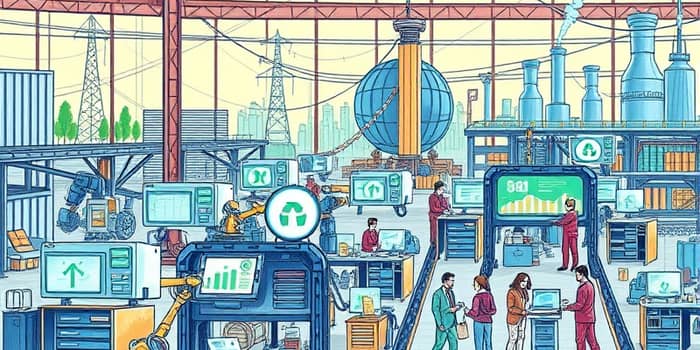
As we look ahead to 2026, the manufacturing sector is poised for a remarkable evolution, driven by unprecedented technological advances and shifting global dynamics.
The journey forward is marked by resilience amid uncertainty, a core theme that defines the industry's response to volatile markets and geopolitical tensions.
This momentum is fueled by a commitment to smart manufacturing and digital transformation, offering a beacon of hope for sustainable growth.
The Rise of Smart Factories
Smart manufacturing is no longer a futuristic concept but a present-day reality, reshaping production floors with cutting-edge technologies.
Investments in this area are soaring, with 80% of executives planning significant budgets for automation and data analytics to enhance competitiveness.
These smart factories leverage IoT, AI, and 5G connectivity to create agile and efficient operations.
- Real-time data monitoring for predictive maintenance
- Integration of digital twins for simulation and optimization
- Use of cobots for safer human-robot collaboration
The benefits are clear: improved productivity, reduced costs, and end-to-end visibility across the supply chain.
AI and Automation: The New Workforce
Artificial intelligence is at the heart of manufacturing's transformation, enabling autonomous decision-making and error reduction.
AI adoption is accelerating rapidly, with over 81% of executives increasing investments to harness its power for innovation.
From generative AI for design to agentic AI for supply chain optimization, these tools are revolutionizing how factories operate.
- Implement AI-driven predictive analytics for maintenance schedules
- Deploy robotics to handle repetitive tasks and enhance safety
- Foster human-AI collaboration to boost creativity and efficiency
This shift is not about replacing jobs but reskilling workers for tech fluency and new roles, as 94% of leaders prioritize training.
Building Resilient Supply Chains
Supply chain disruptions have become a constant challenge, prompting manufacturers to rethink their strategies for greater resilience.
With input costs rising by 5.4% and trade uncertainty persisting, diversification and localization are key to mitigating risks.
Decentralized manufacturing and 3D printing enable small-batch production and faster adaptation to local markets.
- Diversify sourcing to reduce dependency on single regions
- Use 3D printing for on-demand parts and prototypes
- Front-load inventory to buffer against sudden shortages
These adaptations help companies navigate geopolitical shifts and maintain steady output despite external pressures.
Sustainability as a Strategic Imperative
Sustainability is no longer optional; it is a critical driver of consumer choice and regulatory compliance in manufacturing.
79% of consumers prioritize sustainability in their purchasing decisions, pushing companies to adopt eco-friendly practices.
Initiatives like decarbonization, electrification, and the use of smart materials are essential for meeting net-zero goals.
This table highlights how integrated approaches can balance innovation with practical challenges.
Workforce Evolution in the Digital Age
The manufacturing workforce is undergoing a profound transformation, shifting from traditional roles to tech-driven positions.
Labor shortages are a persistent issue, but automation and reskilling offer viable solutions for maintaining high output.
Companies are investing in training programs to equip employees with skills in data analytics, AI, and robotics.
- Offer continuous learning opportunities for upskilling
- Promote flexible work arrangements to attract talent
- Encourage collaboration between tech and production teams
This evolution ensures that human creativity complements machine efficiency, fostering a culture of innovation and adaptability.
Challenges and Risks on the Horizon
Despite the optimism, manufacturers face significant hurdles that require strategic foresight and proactive management.
Supply chain volatility and geopolitical tensions remain top concerns, impacting costs and availability of materials.
Cybersecurity risks are escalating with the convergence of IT and OT systems, demanding robust protection measures.
- Address data quality issues to optimize AI performance
- Manage high investment costs for automation upgrades
- Navigate regulatory changes related to sustainability and trade
Overcoming these challenges is essential for sustaining the industry's momentum and avoiding setbacks.
Future Outlook and Opportunities
The future of manufacturing is bright, with opportunities for growth driven by technological innovation and policy support.
Investments in AI, semiconductors, and reshoring initiatives are set to boost economic output and create new markets.
Digital transformation and sustainability will evolve as core drivers, separating industry leaders from laggards.
- Leverage AI for predictive insights and autonomous operations
- Embrace circular economy principles to reduce waste
- Build resilient systems that adapt to changing consumer demands
By focusing on data foundations and people-tech integration, manufacturers can thrive in an uncertain world.
The path forward is clear: embrace change, invest in innovation, and cultivate a resilient mindset.
Manufacturing in 2026 is not just about surviving challenges but seizing opportunities for a healthier, more dynamic industry.
With smart strategies and collaborative efforts, the sector can achieve sustainable growth and inspire future generations.
References
- https://www.epicflow.com/blog/top-manufacturing-trends-whats-new/
- https://www.goodwin.edu/enews/manufacturing-industry-trends-2026/
- https://www.cleo.com/blog/top-10-manufacturing-trends
- https://hirequest.com/insight/2026-manufacturing-forecast-resilience-trends/
- https://evocon.com/articles/5-key-manufacturing-trends-that-will-shape-2026/
- https://www.manufacturingdive.com/news/5-trends-watch-2026-tariffs-uncertainty-ai-workforce-chemical-investments/809109/
- https://www.deloitte.com/us/en/insights/industry/manufacturing-industrial-products/manufacturing-industry-outlook.html
- https://www.fieldex.com/en/blog/manufacturing-industry-trends-and-innovations-to-watch