As the world economy navigates a complex recovery, inflation remains at the forefront of global concerns. Understanding the intricate patterns of price movements, their causes, and the potential paths forward is crucial for policymakers, businesses, and citizens alike. This article offers a comprehensive examination of projected inflation trends for 2026, highlights the extremes across nations, and proposes strategies to foster resilience and shared prosperity.
Global Trends and Projections
According to recent IMF data, global inflation is projected to decline to 3.7% in 2026, down from 4.2% in 2025. Alternative estimates place it at 3.8%, with a further drop to 3.4% by 2027. These shifts reflect price stability amid recovery and uncertainties—a testament to central banks’ efforts and easing commodity prices.
Underlying this broad moderation are several forces. On one hand, softening demand and lower energy prices have relieved upward pressures on consumer goods and services. On the other, persistent risks—such as geopolitical tensions, supply‐chain disruptions, and currency fluctuations—continue to threaten gains in affordability.
Stark Disparities: Highest and Lowest
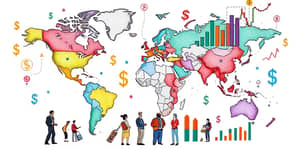
While the global headline figure offers hope, the distribution of inflation rates tells a different story. From Brunei’s modest 0.6% to Venezuela’s staggering 682.1%, the gap underscores stark disparities in inflation rates and the diverging economic realities faced by nations.
At the other extreme, Brunei, Liechtenstein, and Switzerland lead with rates near 0.6%, while China and Thailand register just 0.7%. Such contrasts reveal how governance, fiscal discipline, and external conditions shape price stability.
Regional Perspectives
Inflation’s impact varies widely across regions, reflecting local shocks and policy responses. In advanced economies—where most central banks target around 2%—we see a near return to goals:
- United States: 2.4%, slightly above the Federal Reserve’s target
- Euro Area: 1.9%, with core inflation expected to hit 2% by 2027
- Japan: 2.1%–2.3%, approaching Bank of Japan objectives
- United Kingdom: 2.5%, on track to stabilize by year-end
Contrast this with emerging and frontier markets, where volatility remains elevated. In parts of Africa and the Middle East, currency depreciation, conflict, and commodity dependence have driven rates above 20% in countries such as Sudan (54.6%) and Iran (41.6%). This fragmentation amplifies global inequality and undermines social cohesion.
Drivers of Persistent Inflation
To craft effective responses, we must diagnose the root causes of entrenched price pressures. Major drivers include:
- Hyperinflation in vulnerable states tied to currency collapse and fiscal imbalances (e.g., Venezuela)
- Conflict and supply disruptions in regions like Sudan and Myanmar
- Sanctions and external restrictions affecting Iran and Russia
- Commodity dependence and currency swings in many African nations
These factors often interact, creating a vicious cycle of import cost spikes, wage‐price spirals, and declining real incomes.
Strategies for Resilience and Hope
Despite challenges, pockets of progress and innovation offer blueprints for a more stable future. Key elements of an effective strategy include:
- Sustained policy coordination and innovation among central banks, fiscal authorities, and international institutions
- Targeted support for vulnerable communities through social safety nets and cash transfers to shield against abrupt price shocks
- Diversification of energy and supply sources to reduce vulnerability to commodity swings
- Enhanced monetary frameworks that allow for flexibility while anchoring inflation expectations
By adopting these measures, policymakers can mitigate risks and foster an environment where growth and affordability coexist.
A Call to Collective Action
Inflation is not merely an economic metric; it affects everyday lives—families deciding between groceries and medicine, entrepreneurs weighing investment risks, and governments balancing budgets. Addressing this complex challenge demands empathy, knowledge sharing, and a commitment to inclusive growth.
Stakeholders at all levels—global institutions, national authorities, private sector leaders, and civil society—must collaborate. Through diverse economic landscapes and challenges, we gain insights into what works and what falters. By combining sound policy with grassroots innovation, we can transform inflationary pressures into opportunities for sustainable development.
Looking Forward
As we move into 2026 and beyond, the global community stands at a crossroads. With prudent action, we can guide inflation back toward targets, reduce inequality, and strengthen resilience against future shocks. Ultimately, the journey toward stability is a shared endeavor—one that calls for solidarity, foresight, and unwavering resolve.
In this pivotal moment, let us commit to harnessing data, compassion, and creativity to build a world where price stability underpins prosperity for all.
References
- https://fortuneprimeglobal.com/education/global-inflation-trends-and-economic-disparities-in-2026/
- https://tradingeconomics.com/country-list/inflation-rate
- http://www.ibrc.indiana.edu/ibr/pre/outlook/international.html
- https://worldpopulationreview.com/country-rankings/inflation-rate-by-country
- https://www.voronoiapp.com/economy/Global-Inflation-Forecasts-2026--7565