In today's ever-changing economy, inflation can silently chip away at your hard-earned money.
Understanding its trends is the first step toward financial resilience and peace of mind.
Recent data reveals that US PCE inflation peaked at 6.5% in 2022, signaling a critical period.
This article delves into current patterns, forecasts for 2026, and actionable strategies to shield your wealth.
By staying informed, you can turn challenges into opportunities for growth and stability.
Current and Historical Inflation Trends in the US
Inflation has been a rollercoaster in recent years, with significant peaks and declines.
After hitting its highest since 1981, PCE inflation dropped to 3.8% in 2023 and 2.6% in 2024.
Forecasts suggest it will average 2.6% in 2025, but risks remain on the horizon.
CPI inflation forecasts for late 2025 indicate potential pressures from energy and food costs.
Factors like government data issues add uncertainty, making vigilance essential for savvy investors.
Here are key drivers that have shaped recent inflation trends:
- Supply chain disruptions affecting goods availability.
- Increased demand post-pandemic boosting prices.
- Fiscal stimulus measures injecting liquidity into the economy.
- Labor shortages driving up wage costs.
- Geopolitical events impacting global trade.
Forecasting the Future: What to Expect in 2026
Looking ahead to 2026, economic projections paint a mixed picture of inflation dynamics.
PCE inflation is expected to hover around 2.7%, influenced by ongoing tariff implementations.
Tariffs passing costs to consumers could lead to cumulative price increases in durables and nondurables.
However, weak GDP growth and higher savings rates might temper inflation later in the period.
Shelter inflation, a major CPI component, is forecasted to fall to 3.0% by December 2026.
This decline from a peak of 3.8% offers some relief for households and renters.
Other factors to watch include AI-driven economic dispersion and softening labor markets.
Key forecasts for 2025 and 2026 highlight varied scenarios, as detailed below.
It's crucial to monitor these indicators to adapt your financial plans effectively.
Monetary Policy and Interest Rate Context
The Federal Reserve plays a pivotal role in managing inflation through monetary tools.
Since September 2024, the Fed has cut the federal funds rate by 1.75 percentage points.
Further reductions of 1.25 points are anticipated, aiming for 2.25-2.50% by end-2027.
10-year Treasury yields are projected to decline to 3.25% by 2028, affecting investment returns.
For homeowners, 30-year mortgage rates may drop to 5.0% by 2028, easing housing costs.
Central banks use interest rate hikes to curb inflation, but balancing growth is delicate.
Persistent inflation above the Fed's 2% target requires cautious policy adjustments.
Understanding these moves helps in planning for loans, savings, and overall financial health.
Practical Strategies to Hedge Against Inflation
Protecting your purchasing power involves diversifying investments into inflation-resistant assets.
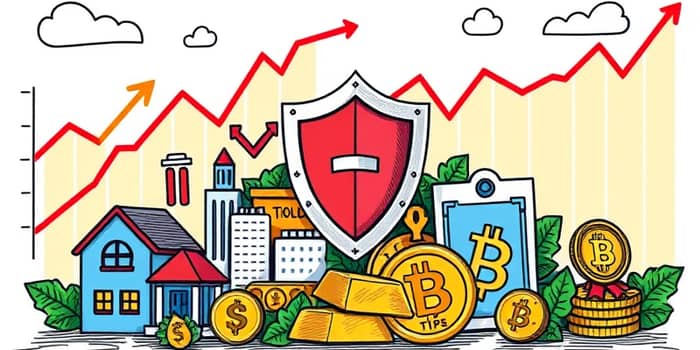
Core hedges like real estate, commodities, and TIPS offer robust defenses against price rises.
Diversification is key to mitigating risks and ensuring portfolio resilience over time.
Here is a list of effective inflation hedges to consider incorporating into your strategy:
- Real estate: Provides rental income and potential appreciation with inflation.
- Commodities: Such as gold and oil, which often rise during inflationary periods.
- TIPS: Treasury Inflation-Protected Securities adjust with CPI for guaranteed protection.
- Cryptocurrencies: Like Bitcoin, with limited supply and growing adoption.
- Infrastructure: Utilities and transport sectors with inflation-linked revenue streams.
Each hedge type has unique benefits and drawbacks, as summarized in the table below.
Beyond specific hedges, adopting a holistic approach to asset allocation is vital.
Consider these tips for building a resilient portfolio:
- Mix stocks and bonds with alternative assets like commodities and precious metals.
- Allocate based on your risk tolerance and investment time horizon.
- Rebalance regularly to maintain desired exposure and capitalize on market shifts.
- Keep an emergency fund of 3-6 months' expenses for unexpected downturns.
- Consult financial advisors for personalized plans tailored to your goals.
Preparation for downturns involves proactive adjustments and continuous monitoring of economic signals.
Broader Economic Context and Investment Outlook
The broader economy in 2026 is expected to face growth slowdowns and shifting dynamics.
Weak GDP and consumption, coupled with higher savings, will influence inflation trajectories.
Shelter inflation is forecasted to fall to 3.0% by December 2026, easing cost burdens.
Other factors include AI-driven dispersion in productivity and potential carbon allowance impacts.
Investment outlooks favor diversifiers if growth disappoints or inflation surprises upwards.
Staying updated with data releases, such as OECD consumer prices, enhances decision-making.
Here are broader economic factors to keep on your radar:
- Technological advancements in renewables and fintech shaping market trends.
- Consumer shifts toward sustainability and digital solutions affecting demand.
- Global fragmentation and trade policies influencing supply chains.
- Labor market softening potentially reducing wage pressures.
- Fiscal stimulus measures continuing to inject liquidity into systems.
By navigating these elements, you can position yourself for long-term financial success.
In conclusion, empowering yourself with knowledge and strategic actions is the best defense against inflation.
Start today by assessing your portfolio and implementing these insights to secure a brighter future.
References
- https://www.morningstar.com/economy/inflation-set-rise-tariff-costs-hit-consumers-2026
- https://www.foxbusiness.com/economy/december-inflation-data-extremely-muddy-due-government-shutdown-fallout-economists-warn
- https://www.oecd.org/en/data/insights/statistical-releases/2026/01/consumer-prices-oecd-updated-12-january-2026.html
- https://am.jpmorgan.com/us/en/asset-management/adv/insights/market-insights/market-updates/notes-on-the-week-ahead/the-inflation-outlook/
- https://www.thelandgeek.com/blog-inflation-hedge-investments-2026/
- https://www.in2013dollars.com/inflation-rate-in-2026
- https://www.schwab.com/learn/story/tips-and-inflation-what-to-know-now
- https://tradingeconomics.com/united-states/inflation-cpi
- https://www.cambridgeassociates.com/insight/2026-outlook-diversifier-views/
- https://www.bls.gov/cpi/
- https://www.blackrock.com/us/financial-professionals/insights/investing-in-2026
- https://www.clevelandfed.org/indicators-and-data/inflation-nowcasting
- https://privatebank.jpmorgan.com/eur/en/insights/latest-and-featured/outlook/are-you-ready-for-2026-five-pitfalls-to-avoid
- https://www.stlouisfed.org/on-the-economy/2025/dec/professional-forecasters-past-performance-outlook-2026
- https://www.pimco.com/us/en/insights/charting-the-year-ahead-investment-ideas-for-2026