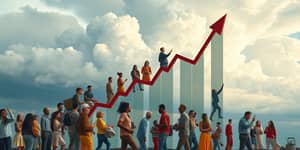
Human capital lies at the heart of every thriving economy and society. Beyond factories, machines, or land, it resides in the minds, health, and skills of people. When nurtured, it becomes the force that drives innovation, productivity, and well-being across generations.
Historical Roots and Evolution
The idea that individuals possess valuable abilities dates back to Adam Smith, who described them as acquired and useful abilities of individuals. He saw education and apprenticeship as forms of fixed capital contributing to national fortune. In the 1950s, Chicago School economists formalized the term “human capital,” and Gary Becker’s landmark 1964 book cemented the concept. By treating people’s knowledge and health as investments rather than expenses, they sparked a paradigm shift in economics and policy.
This evolution reframed education and training as drivers of long-term returns. Unlike machines that wear out, human capital can appreciate, yielding benefits not only to individuals but to entire communities and nations.
Measuring Human Capital
To harness its power, we must measure human capital rigorously. The World Bank Human Capital Index (HCI) offers a comprehensive framework, scoring countries on health and education outcomes. Survival rates, school quality, stunting prevention, and adult survival combine into a single metric between 0 and 1, revealing stark contrasts across regions.
These figures underscore how compounding returns accelerating productivity arise from targeted investments. Countries with HCI scores above 0.8 often enjoy higher GDP per capita, while those below 0.4 struggle to unlock growth.
Driving Economic Growth
Human capital fuels innovation, adaptability, and resilience. Endogenous growth theories place it at the center, highlighting how learning, creativity, and skills amplify output beyond what machinery alone can achieve. A one-percent increase in bachelor’s degree holders, for instance, correlates with a 0.04% rise in GDP over time.
At the national level, robust human capital:
- Enhances investments in education and health to yield enduring benefits
- Promotes wage flexibility and reduces structural unemployment
- Fosters innovation ecosystems and entrepreneurship
In the United States, coastal regions leverage high education and health standards to outpace slower-growing areas, driving productivity and poverty reduction.
Investing in People: Strategies for Success
To translate potential into performance, organizations and governments must adopt a multi-pronged approach. Key strategies include:
- Accessible, high-quality education from early childhood through adulthood
- Comprehensive healthcare programs targeting nutrition, mental health, and disease prevention
- Continuous on-the-job training and skill development aligned with industry needs
Firms can cultivate talent through mentorship, cross-functional rotations, and empowerment programs. At the macro level, policy reforms should ensure equitable access to schooling, reduce stunting, and promote lifelong learning initiatives.
When stakeholders collaborate—schools, employers, policymakers, and communities—resources align, and synergies emerge. This collective effort lays the foundation for building a resilient workforce for tomorrow.
Challenges and the Road Ahead
Despite overwhelming evidence of its value, human capital investments face obstacles. Financial constraints, demographic shifts, and lengthy payoff horizons can deter both private and public actors. Firms risk losing firm-specific skills in downturns, while developing countries wrestle with misallocation of talent in low-skilled sectors.
- Limited budgets for education and health infrastructure
- Time lags before cohort effects materialize in productivity
- Brain drain and unequal opportunities across regions
Yet, these challenges also present opportunities. Emerging technologies such as adaptive learning platforms and telemedicine can extend reach and efficiency. International cooperation and development finance can buffer resource gaps, narrowing disparities and lifting millions out of poverty.
Actionable Steps for Individuals and Organizations
Everyone can play a part in strengthening human capital—at work, at home, and in the community. Consider these practical steps:
- Commit to lifelong learning by pursuing online courses, certifications, or workshops
- Prioritize mental and physical well-being through regular checkups, exercise, and balanced nutrition
- Engage in knowledge-sharing networks, mentorships, and peer collaborations
- Advocate for policies that fund early childhood education and universal healthcare
Small actions compound over time, creating an environment where skill development and health maintenance become routine pillars of success.
Conclusion: Embracing Human Potential
Human capital is not merely an economic abstraction—it represents the dreams, talents, and health of real people. Investing in it transforms individual lives and elevates entire societies. By recognizing its central role, measuring it accurately, and channeling resources wisely, we unlock unprecedented growth and shared prosperity.
As we stand at the crossroads of technology, globalization, and social change, our collective choice is clear: to invest in machines or to invest in minds. The evidence is undeniable—when we cultivate human capital, we sow the seeds of innovation, resilience, and well-being for generations to come.
References
- https://www.ncbi.nlm.nih.gov/books/n/statpearls/article-147680/
- https://mlari.ciam.edu/economic-growth-and-the-role-of-human-capital
- https://en.wikipedia.org/wiki/Human_capital
- https://www.britannica.com/money/human-capital
- https://www.unomaha.edu/college-of-business-administration/center-for-economic-education/teacher-resources/human-capital.php
- https://blogs.worldbank.org/en/investinpeople/human-capital-investments-spur-economic-growth-and-development
- https://www.econlib.org/library/Topics/College/humancapital.html
- https://one.oecd.org/document/EDU/EDPC(2022)2/en/pdf
- https://www.worldbank.org/en/publication/human-capital
- https://www.brookings.edu/articles/the-contribution-of-human-capital-to-economic-growth/
- https://www.weforum.org/stories/2019/06/what-is-human-capital-know/
- https://pubs.aeaweb.org/doi/10.1257/jep.36.3.75