Gross Domestic Product, or GDP, is often hailed as the ultimate barometer of a nation's economic health, a single number that purports to capture the vitality of an entire economy.
It measures the monetary value of final goods and services produced within a country over a specific period, typically a quarter or year.
Yet, behind this seemingly authoritative figure lies a complex and incomplete story that can mislead policymakers and citizens alike, hiding critical aspects of societal well-being.
In today's world, where economic challenges are multifaceted, understanding both the power and the pitfalls of GDP is essential for making informed decisions.
This article explores what GDP truly measures, its profound limitations, and why we need to look beyond it for a fuller picture of progress.
By the end, you'll gain practical insights into how to interpret economic data more holistically and advocate for better metrics.
Understanding GDP: The Core Concepts
At its heart, GDP quantifies the total economic output generated within a country's borders during a given timeframe.
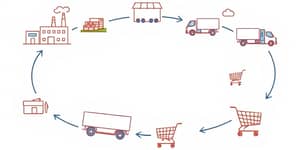
It includes all final goods and services—those sold to end-users—while avoiding double-counting by excluding intermediate products.
The most common way to calculate GDP is through the expenditure method, which breaks it down into key components.
- Consumption (C): This is the largest component, covering household spending on everything from groceries to healthcare.
- Investment (I): This includes business expenditures on capital like machinery and infrastructure, driving future growth.
- Government Spending (G): Encompasses public sector purchases, from defense to education services.
- Net Exports: Represents exports minus imports, reflecting a country's trade balance with the world.
This formula, GDP = C + I + G + (Exports - Imports), provides a snapshot of who is buying the production.
However, GDP can also be approached through the production or income methods, offering different perspectives on the same economic activity.
The production approach sums value-added at each stage, while the income approach tallies earnings like wages and profits.
Despite its widespread use, GDP differs from measures like Gross National Income (GNI), which accounts for citizens' global earnings.
GNI includes what domestic entities produce worldwide, unlike GDP's focus on geographic borders.
Similarly, Net Domestic Product adjusts for depreciation, something GDP overlooks entirely.
The Limitations of GDP: What It Fails to Capture
While GDP offers a useful economic overview, it misses critical dimensions that define human well-being and sustainability.
These limitations can distort policy decisions and societal priorities, leading to unintended consequences.
- Income and Wealth Inequality: GDP growth can mask disproportionate benefits favoring the wealthy, exacerbating social divides.
- Environmental Costs: Activities like deforestation boost GDP but ignore long-term ecological damage, threatening sustainability.
- Non-Market Activities: Unpaid work such as childcare and volunteering is excluded, undervaluing contributions often made by marginalized groups.
- Quality of Life: GDP counts negative events like accidents as growth, failing to reflect true happiness or health improvements.
- The Data Economy: Digital transactions involving personal data are often overlooked, creating an incomplete picture of modern activity.
For instance, Brazil's soybean farming increased GDP, but the associated Amazon deforestation poses severe environmental risks.
Similarly, in the U.S., national GDP grew 45.4% from 2001 to 2021, yet regional disparities were stark.
San Francisco saw an 87.4% growth, while New Orleans contracted by 5.2%, highlighting how GDP can obscure localized economic struggles.
This uneven growth means policymakers might miss opportunities to address inequities, focusing instead on aggregate numbers.
Moreover, GDP cannot distinguish between "good" and "bad" spending, counting everything from healthcare to military expenses as positive.
A car accident that leads to medical bills and a new car purchase appears as economic growth, despite the net loss in well-being.
Such perverse indicators show that GDP often values transactions over genuine societal progress.
Why These Blind Spots Matter
The limitations of GDP create systemic issues that ripple through economies and societies.
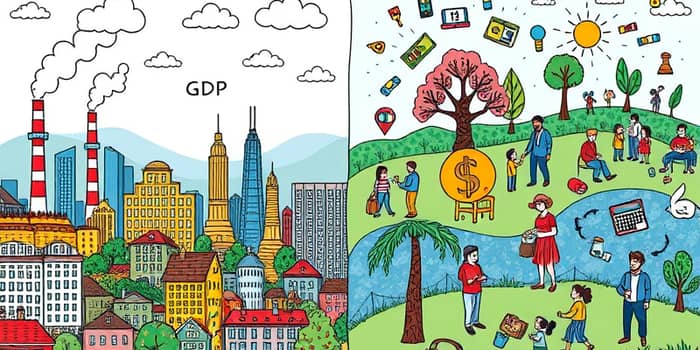
By prioritizing monetary exchange, GDP offers a deeply distorted, materialistic picture of what truly matters in life.
It ignores intangible goods like peacefulness, environmental protection, and family bonding, which don't involve financial transactions.
This misalignment can lead to perverse incentives, where environmentally friendly innovations are seen as drags on growth.
For example, transitioning to renewable energy might reduce GDP in the short term if it disrupts established, high-GDP industries like fossil fuels.
As the IMF notes, GDP's shortcomings have become especially obvious in recent years, with its failure to account for inequality and digital technology's effects.
This has sparked calls for rethinking economic measurement to better reflect modern realities.
Alternative Approaches: Beyond GDP
There is a growing consensus that complementary metrics are needed to foster fairer, greener, and more inclusive futures.
Better measures should aim to capture a broader spectrum of societal well-being, moving beyond GDP's narrow focus.
- Account for income and wealth distribution to ensure prosperity is shared equitably.
- Measure environmental sustainability and resource depletion to promote long-term health.
- Include non-market activities like unpaid work to value all contributions to society.
- Assess quality of life improvements through indicators like health and happiness.
- Adapt to the data economy by incorporating digital transactions and information flows.
- Distinguish productive from destructive spending to guide policy more effectively.
Policymakers need focused, accurate data to make informed decisions, and GDP alone is not up to the task.
For instance, countries like Norway often rank higher in quality-of-life indices than the U.S., despite lower GDP, due to robust social support systems.
This highlights how alternative metrics can provide a more nuanced view of success, inspiring efforts to balance economic growth with human well-being.
Historical Context and Key Insights
GDP became dominant partly due to wartime demands for a measure of total economic activity, but it has always had critics.
From its inception, questions have been raised about its comprehensiveness, yet it remains a staple in economic discourse.
Key statistics underscore its limitations: consumption is the largest component, but this doesn't guarantee societal happiness.
The case of Brazil shows how GDP growth can come at the cost of environmental degradation, a trade-off not reflected in the numbers.
To move forward, we must embrace a more holistic approach to economic measurement.
By understanding what GDP misses, individuals and leaders can advocate for policies that prioritize sustainability, equity, and well-being.
This practical awareness empowers us to challenge the status quo and work towards economies that truly serve people and the planet.
References
- https://pressbooks.pub/introtomacro/chapter/production-and-economic-growth/
- https://www.marshalledu.com/limitationsofgdp
- https://www.imf.org/en/publications/fandd/issues/series/back-to-basics/gross-domestic-product-gdp
- https://www.worldfinance.com/strategy/why-gdp-is-no-longer-the-most-effective-measure-of-economic-success
- https://www.ebsco.com/research-starters/economics/gross-domestic-product-gdp
- https://www.lisep.org/content/gdp-poor-measure-of-nations-economic-health-says-ludwig-institute-report
- https://online.hbs.edu/blog/post/why-is-gdp-important
- https://www.visionofhumanity.org/the-problem-with-gdp/
- https://databank.worldbank.org/metadataglossary/world-development-indicators/series/NY.GDP.MKTP.KD.ZG
- https://corporatefinanceinstitute.com/resources/economics/gross-domestic-product-limitations/
- https://www.bea.gov/resources/learning-center/what-to-know-gdp
- https://study.com/academy/lesson/video/gross-domestic-product-definition-and-components.html
- https://www.demos.org/research/whats-missing-gdp