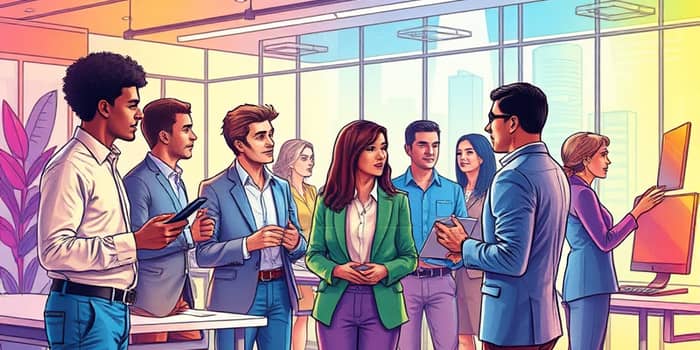
As technology accelerates and economic pressures mount, the workplace of 2026 and beyond demands fresh strategies and resilient mindsets.
The Rise of AI and Automation
Companies worldwide plan to ramp up AI investments, with 92% of organizations committing more resources in the next three years. Far from outright replacements, advanced algorithms are positioned as assistants that enhance human productivity.
Currently, 75% of knowledge workers already integrate AI tools into daily tasks. Entry-level white-collar positions face the greatest erosion, potentially displacing 12 million U.S. workers by 2030. Yet, this shift opens avenues for human-machine collaboration that drive innovation.
Experts coin this synergy “superagency in the workplace,” where humans add context, empathy, and ethics to algorithmic output, forging a balanced ecosystem of skills and technology.
Hybrid and Remote Work Evolution
Remote work remains a coveted perk, but a phenomenon called “hybrid creep” is emerging. In 2023, hybrid employees spent three days in office; by 2025, 34% report four-office days weekly.
Despite Return-to-Office mandates, 69% of workers prefer a pay cut over losing flexibility. Organizations are redesigning offices into vibrant collaboration hubs focused on teamwork rather than routine desk hours.
This shift reframes flexibility from “where” to “when,” giving employees autonomy while preserving in-person collaboration for critical brainstorming and culture-building.
Tackling Talent Shortages and Mobility
Talent scarcity has become a defining challenge. Globally, 74% of employers report difficulty filling roles, especially in healthcare, IT, and energy sectors.
Remote work and global mobility partially alleviate these shortages, enabling cross-border hiring and access to diverse talent pools. However, rising unemployment in certain regions gives employers greater leverage in negotiations.
Flexibility and inclusive cultures are now key differentiators in attracting and retaining top performers.
Skill-Based Hiring and Continuous Learning
Ryan Roslansky, LinkedIn’s CEO, states, “Skills are the new currency.” By 2030, 39% of skill sets will transform, shifting hiring emphasis from degrees to demonstrable abilities.
Organizations are implementing on-the-job bootcamps in AI, data analysis, cybersecurity, and project management. Workers who pursue micro-credentials and regular upskilling remain competitive in an ever-evolving labor market.
- Adopt digital learning platforms and mentorship programs.
- Encourage cross-functional projects to broaden skill sets.
- Invest in AI literacy combined with emotional intelligence development.
Prioritizing Employee Well-Being
Burnout costs the global economy $322 billion annually. As 85% of employees hold employers accountable for their well-being, retention strategies now incorporate mental health benefits, flexible schedules, and social support networks.
Gen Z, the fastest-growing workforce segment, values work-life balance above all. Companies that demonstrate genuine care see reduced absenteeism and turnover, fostering loyalty and engagement.
Career Future-Proofing Strategies
With up to 30% of jobs automatable by the mid-2030s, professionals must be agile. Key tactics include:
- Specializing in high-demand fields like cybersecurity and green technologies.
- Building a personal brand through thought leadership and networking.
- Exploring freelance platforms and polyworking for diversified income streams.
Proactive career pivots and targeted reskilling hedge against displacement and open doors to emerging industries.
Balancing Technology and Human-Centric Skills
Behavioral scientist Jen Paterno argues that the term “soft skills” is misleading; these abilities are now core competencies. Collaboration, storytelling, and emotional intelligence are vital.
Gen Z workers expect parity between technical and people skills. Empowering employees with trust, transparent communication, and autonomy fosters an environment where creativity and AI-enhanced workflows flourish.
Navigating Economic and Structural Shifts
Global growth is slowing, unemployment is rising, and white-collar roles face downward pressure while blue-collar opportunities surge in infrastructure and energy. HR budgets are under scrutiny, prompting organizations to deploy AI agents for administrative duties.
Political polarization and cost-of-living increases further complicate workforce dynamics. Companies that prioritize cultural cohesion, continuous learning, and equitable policies will emerge as leaders in the next decade.
Conclusion: Charting a Resilient Path Forward
The future of work is defined by the interplay of technology, human skill, and economic realities. Success hinges on adopting a growth mindset, investing in continuous learning, and nurturing human-centric values alongside digital expertise.
By embracing flexibility, prioritizing well-being, and strengthening collaboration between people and AI, organizations and individuals can thrive amid uncertainty. The next decade offers unprecedented opportunity for those willing to adapt, innovate, and lead with empathy and vision.
References
- https://cake.com/blog/future-of-work-trends/
- https://careerlaunchpad.arcadia.edu/blog/2026/01/23/2026-work-trends-10-experts-predict-the-future-of-work/
- https://www.weforum.org/publications/the-future-of-jobs-report-2025/
- https://hbr.org/2026/02/9-trends-shaping-work-in-2026-and-beyond
- https://www.youtube.com/watch?v=oDO_hTtQedQ
- https://www.nexford.edu/insights/how-will-ai-affect-jobs