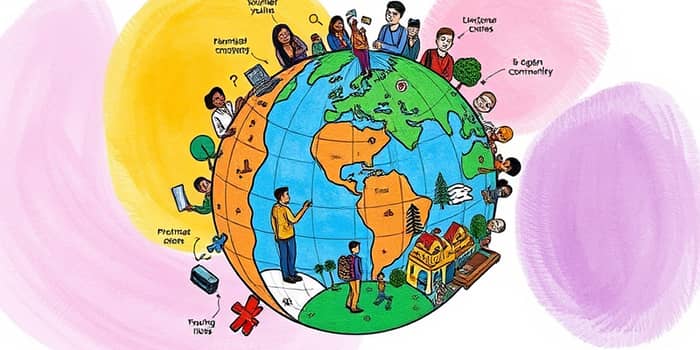
Our world stands at the brink of a profound transformation, one that is silently reshaping the foundations of our economies and societies.
Driven by powerful demographic forces, this shift presents both unprecedented challenges and exciting opportunities for investors.
Understanding these changes is essential for navigating the future global landscape with confidence and foresight.
From population peaks to aging societies, the data tells a compelling story of a planet in flux.
We can harness this knowledge to build resilient portfolios and drive positive impact.
The Unfolding Demographic Story
Global population dynamics are entering a new era of complexity.
The world reached approximately 8.2 billion people in 2025, with projections heading toward 9.7 billion by 2050.
This growth is not uniform; it is concentrated in specific regions like India, Nigeria, and the Democratic Republic of the Congo.
Simultaneously, the global fertility rate is declining, poised to fall below the replacement threshold of 2.1 births per woman by 2050.
This decline is fueled by urbanization, education, and changing social norms, marking a historic demographic shift.
Investors must pay attention to these macro trends as they redefine market potentials.
Regional Waves of Change
Demographic patterns vary dramatically across the globe, creating distinct investment climates.
First wave regions, including advanced economies, face significant aging pressures.
- Their average fertility rate is only 1.2 children per woman.
- The working-age population share is dropping, projected to fall to 59% by 2050.
- Countries like Japan have almost a third of their population aged 65 and above.
Second wave regions, such as emerging Asia and India, offer different dynamics.
- They have a total fertility rate of 2.2, with peak momentum expected in the 2030s.
- India, for example, added 12.9 million people recently, showcasing robust growth.
- This region will provide a growing share of global labor and consumption.
Sub-Saharan Africa stands apart as the only exception to contraction trends.
It continues with rapid population growth, with countries like Niger and Uganda projected to nearly double by mid-century.
These regional disparities highlight the need for tailored investment strategies.
The Aging Global Village
Aging populations are becoming a dominant feature worldwide.
People aged 60 and above are expected to increase from 1.1 billion to 2.1 billion by 2050.
Age structures are inverting from pyramids to obelisks, with more elderly and fewer youth.
- This shift creates rising demand for health, wellness, and age-tailored services.
- Seniors will account for one-quarter of global consumption by 2050.
- It also strains public finances and healthcare systems.
The median age is rising, with Eastern Asia already at 41 years.
This aging trend underscores the urgent need for innovation in various sectors.
Investment Implications: Riding the Demographic Waves
Demographic shifts unlock diverse market opportunities for savvy investors.
Aging populations drive demand for sectors like healthcare and leisure.
Youth-driven markets thrive in areas such as housing, digital media, and fintech.
A vibrant, youthful labor pool in emerging regions offers dynamic talent access.
However, this requires sufficient investment in skills development to unlock potential.
Rapid urban growth necessitates smart infrastructure and technology solutions.
By 2050, developing countries will dominate consumption, reshaping global economic power.
This table summarizes key regional support ratios, highlighting dependency challenges:
Support ratios indicate the economic burden of aging, guiding investment in productivity tools.
Challenges Ahead: Navigating the Shifts
These demographic changes pose significant economic risks that cannot be ignored.
Global economic growth is projected to slow throughout the 21st century due to aging.
Falling fertility rates shift the balance toward youth scarcity and dependency burdens.
- Declines in productive-age populations test economic systems.
- Public finances face pressure from rising healthcare and pension costs.
- Social cohesion may be strained by generational gaps.
Regional stress points amplify these challenges.
In Sub-Saharan Africa and South Asia, rapid growth stresses food and infrastructure.
In East Asia and Eastern Europe, rapid contraction tests economic resilience.
The age mix effect on GDP is real, as seen in Australia and Spain's data.
Addressing these issues requires proactive and innovative approaches.
Strategies for Adaptation and Growth
To thrive in this changing world, investors and policymakers can leverage several strategies.
Higher labor intensity and productivity growth are crucial for sustaining economies.
Effective migration policies can help balance demographic imbalances.
- Invest in healthy aging initiatives to mitigate negative impacts.
- Rethink systems for work and retirement to adapt to longer lifespans.
- Foster intergenerational collaboration to combine youth innovation with elder experience.
Building well-planned cities with advanced transport is a key opportunity.
Leveraging youthful innovation can fuel breakthroughs in technology and sustainability.
Investing in skills development ensures that young populations are equipped for future jobs.
Smart infrastructure and green solutions address urban growth needs.
By embracing these levers, we can turn demographic challenges into avenues for growth.
The future belongs to those who anticipate and act on these shifts.
Start by diversifying portfolios to include sectors aligned with aging and youth trends.
Engage with emerging markets to tap into their dynamic consumer bases.
Support policies that promote sustainable development and social equity.
Together, we can build a resilient and prosperous world for generations to come.
References
- https://www.bakertilly.global/insights/global-demographic-shifts
- https://www.mckinsey.com/mgi/our-research/dependency-and-depopulation-confronting-the-consequences-of-a-new-demographic-reality
- https://www.visionofhumanity.org/after-the-peak-challenges-of-a-shrinking-world/
- https://datareportal.com/reports/digital-2026-global-population-trends
- https://www.cbo.gov/publication/61994
- https://blogs.worldbank.org/en/opendata/world-population-day--trends-and-demographic-changes