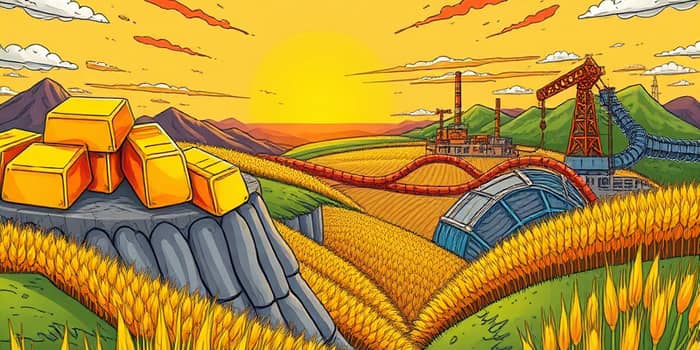
In an era of economic uncertainty and rapid change, raw assets like gold and grains stand as timeless pillars of stability and growth.
As we navigate 2026, the commodities market unfolds a compelling story of resilience and transformation, offering both challenges and unprecedented opportunities.
Understanding these dynamic forces can unlock profound diversification benefits for savvy investors seeking to fortify their portfolios.
From the glitter of precious metals to the sustenance of agriculture, each sector holds unique promise in a world shaped by geopolitics, technology, and shifting demand.
The Golden Age: Precious Metals in 2026
Gold has captivated markets with its stunning performance, breaking record after record in recent years.
As of early January 2026, gold prices hovered around $4,581 per ounce, reflecting a remarkable yearly gain of over 70%.
This surge is not just a flash in the pan but a testament to gold's enduring role as a safe haven asset.
Investors are flocking to gold amid geopolitical tensions and economic volatility, driving demand to new heights.
Key forecasts for 2026 paint an optimistic picture, with institutions like HSBC and J.P. Morgan predicting continued strength.
Several factors are fueling this bullish outlook, making gold a cornerstone for investment strategies.
- Geopolitical risks and central bank demand are at record levels, with purchases averaging 585 tonnes quarterly.
- Investor diversification through ETFs and physical holdings is expanding, with gold accounting for 2.8% of assets under management.
- A weaker US dollar and lower interest rates enhance gold's appeal as an inflation hedge.
Silver is also poised to outperform, supported by ongoing deficits and its role in the energy transition.
Energy Commodities: Oil, Gas, and Uranium
The energy sector is undergoing a profound shift, balancing traditional resources with emerging alternatives.
Oil and gas markets face softer pricing due to abundant supply and cooling demand growth.
Electric vehicle sales exceeding 20 million in 2025 are reshaping energy consumption patterns globally.
Despite this, opportunities abound, particularly in uranium, which is forecast to reach $100 per pound by end-2026.
- Uranium benefits from nuclear capacity growth and supply constraints, with production increasing by 16.5 million pounds year-over-year.
- Brent crude is in a moderate bear market early in 2026, but stability is expected as the energy transition progresses.
- Risk factors include geopolitical shocks and policy surprises that could disrupt supply chains.
Investors should watch for equilibrium in this evolving landscape, where innovation meets necessity.
Base and Industrial Metals: The Green Wave
Base metals like copper and aluminum are riding a wave of optimism driven by the global push for sustainability.
The energy transition is accelerating demand for these metals, essential in EVs, renewables, and grid infrastructure.
Copper wiring and aluminum lightweighting are critical components in building a greener future.
Goldman Sachs highlights supportive factors, including sturdy GDP growth and anticipated Federal Reserve rate cuts.
- Energy transition boosts infrastructure demand, with investments pouring into renewables across China, the EU, and the US.
- Supply-demand dynamics are favorable, as bull markets broaden from precious to industrial metals.
- Macro factors like dovish monetary policies provide tailwinds for continued growth.
This sector offers a tangible way to invest in the fight against climate change while capturing economic gains.
Agriculture and Grains: Feeding the Future
Agriculture commodities provide a foundation for global stability, with grains like wheat and corn playing pivotal roles.
After years of volatility, the outlook for 2026 is cautiously optimistic, supported by strong harvests and improved logistics.
Prices have softened due to ample supplies, but long-term drivers remain robust.
- Rising populations and incomes in emerging markets are driving diet diversification and protein growth.
- New uses in biofuels and plant-based products expand demand beyond traditional food sectors.
- Global trade volumes are increasing, enhancing market liquidity and access.
However, risks such as weather disruptions and policy changes require careful monitoring.
World Bank projections suggest prices may hit a six-year low, but this presents buying opportunities for strategic investors.
Major Themes and Drivers for 2026
The commodities market is influenced by a confluence of themes that shape investment decisions.
Optimism stems from post-volatility recovery and the energy transition's transformative impact.
Macro factors like Federal Reserve policies and geopolitical events create both opportunities and challenges.
- Energy transition spurs metals demand, with silver linings in EV adoption and renewable energy investments.
- Geopolitical risks can subdue or boost markets, depending on global stability and trade relations.
- Supply surprises and weather anomalies add layers of complexity to forecasting and risk management.
Understanding these drivers helps investors navigate uncertainties and capitalize on emerging trends.
Investor Implications and Practical Strategies
For investors, commodities offer a powerful tool for diversification and growth in 2026.
Gold's low correlation with other assets makes it an ideal hedge against market downturns.
Metals tied to the green wave provide exposure to sustainable economic shifts.
Agriculture sectors benefit from technological advancements and expanding global trade.
- Diversify across sectors to balance risk and reward in volatile markets.
- Monitor central bank actions and geopolitical developments for timing entry and exit points.
- Consider ETFs and physical holdings to gain exposure without direct commodity trading complexities.
Practical steps include staying informed through reliable sources and adjusting portfolios as new data emerges.
Embrace the journey of learning and adapting to harness the full potential of raw assets.
By integrating commodities into your investment strategy, you can build resilience and pursue growth in an ever-changing world.
Let this knowledge empower you to make informed decisions that align with your financial goals and values.
References
- https://fortune.com/article/current-price-of-gold-01-12-2026/
- https://www.parametricportfolio.com/blog/commodity-market-outlook-2026
- https://www.mining.com/gold-price-could-hit-5000-in-h1-2026-says-hsbc/
- https://www.morganstanley.com/im/en-lu/institutional-investor/insights/articles/trends-driving-optimism-in-2026.html
- https://www.fxempire.com/forecasts/article/gold-price-forecast-cooling-growth-and-sticky-inflation-set-stage-for-golds-next-breakout-1572143
- https://www.citigroup.com/global/insights/commodities-market-outlook-4q-25
- https://www.gold.org/goldhub/research/gold-outlook-2026
- https://www.goldmansachs.com/insights/goldman-sachs-research/commodity-outlook-2026-ride-the-power-race-and-supply-waves
- https://www.jpmorgan.com/insights/global-research/commodities/gold-prices
- https://www.worldbank.org/en/research/commodity-markets
- https://fortune.com/article/current-price-of-gold-01-09-2026/
- https://www.spglobal.com/energy/en/news-research/topics/commodities-2026
- https://tradingeconomics.com/commodity/gold
- https://www.cmegroup.com/articles/2026/precious-metals-outlook-2026-market-dynamics-following-a-record-breaking-year.html