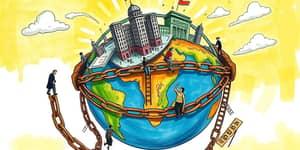
Africa stands at a pivotal moment in history. With economies accelerating faster than ever and a youthful population on the rise, the continent is poised to redefine global prosperity. Sub-Saharan Africa’s projected average growth of 4.6% in 2026 outpaces Asia for the first time, signaling a new era of opportunity. Yet, translating output gains into broad-based prosperity demands strategic vision, bold reforms, and massive investment in human capital.
Across cities and rural regions, entrepreneurs, policymakers, and communities are converging to unlock Africa’s potential. From bustling markets in Lagos to tech hubs in Nairobi, the narrative is shifting from vulnerability to resilience. By understanding the forces propelling this momentum—and addressing the stubborn challenges that remain—we can chart a path toward inclusive growth and shared success.
Accelerating Growth: A New Chapter
Africa’s growth story is more than numbers; it reflects resilience amid global uncertainties. Nominal GDP soared from $631.2 billion in 1990 to over $2.8 trillion in 2026. While the continent’s share of global output hovers just above 2%, the pace of expansion marks a dramatic turnaround. Several countries now enjoy inflation under control, improved trade balances, and double-digit growth in select economies, creating a fertile environment for investment and job creation.
International institutions forecast sustained momentum through 2027. World Bank estimates predict 4.4% annual growth in 2026–27, while the IMF highlights robust performance across diverse regions. This progress underlines a fundamental shift: Africa is no longer just a beneficiary of global trends, but a driver of innovation and value-added industries.
Diversity of Economies: Top Voices Rising
Today’s African economic landscape is characterized by an emerging middle tier of economies transforming regional dynamics. South Africa, Egypt, Nigeria, Algeria, Morocco, Kenya, Ethiopia, Ghana, Côte d’Ivoire, and Angola lead the way. Their evolution speaks to diversified sectors and policy reforms that have unlocked new growth corridors.
This table highlights how sustained investments in services, manufacturing, and infrastructure have propelled these economies forward. Some remain reliant on oil or mineral exports, underscoring the urgent need for further diversification to shield against commodity price shocks.
Tapping the Demographic Dividend
Africa is home to the world’s youngest population demanding jobs and opportunity. By 2050, the continent will account for one quarter of the global populace, with sub-Saharan Africa adding 620 million working-age individuals between 2025 and 2050. This demographic surge represents both a monumental asset and a pressing challenge. Creating quality employment for hundreds of millions will define Africa’s long-term prosperity.
Today’s model, where one percent of GDP growth yields only 0.04% growth in wage employment, is insufficient. Seventy-three percent of workers remain in small, informal family enterprises, limiting productivity and income potential. A deliberate shift toward scaling medium and large firms is essential to increase formal jobs, drive innovation, and raise living standards.
Key Growth Drivers: Sectors and Policies
Unlocking Africa’s potential hinges on targeted investments, policy reforms, and strategic collaborations. Four pillars stand out:
- Demographics and Human Capital: Expand access to quality education, vocational training, and youth employment programs to transform human assets into economic powerhouses.
- Industry-Led Growth: Prioritize energy generation, mineral beneficiation, tech adoption, and service sector expansion for higher value-added output.
- Resource Mobilization: Leverage Africa’s abundant natural wealth to finance development and reduce dependency on external aid.
- Integration and Trade: Implement AfCFTA provisions fully, streamline cross-border logistics, and adopt digital platforms to scale markets and create jobs.
By aligning public and private investment around these pillars, African nations can accelerate transformation and build resilience to global shocks.
Challenges and the Path Ahead
Despite impressive gains, significant hurdles remain. External debt service has climbed, doubling to 2% of GDP in 2024, squeezing fiscal space. Investment gaps in education, infrastructure, and job creation persist. Power outages, transport bottlenecks, and regulatory uncertainty deter capital. Informal employment continues to dominate, capping productivity growth.
Global headwinds—rising interest rates, volatile trade conditions, and waning development assistance—compound risks. Yet, Africa’s determination to navigate these challenges is unwavering. Policymakers, entrepreneurs, and civil society must collaborate on comprehensive reforms that balance short-term stabilization with long-term investment.
Conclusion: Forging a Prosperous Tomorrow
Africa’s rise is not a fait accompli; it demands vision, leadership, and decisive action. By harnessing demographic strengths, diversifying economies, and investing in human capital, the continent can translate rapid growth into inclusive prosperity. Each stakeholder—from grassroots innovators to global partners—has a role to play in amplifying progress.
As Africa ignites its growth story, its people carry the promise of transformation. The choices made today—in boardrooms, classrooms, and parliaments—will shape an era where opportunity is boundless, and success is shared. The journey is underway. Now is the time to seize it with courage, creativity, and commitment.
References
- https://www.semafor.com/article/02/02/2026/africas-economic-growth-set-to-overtake-asias
- https://africa.businessinsider.com/local/markets/imf-data-compares-africas-biggest-economies-in-1990-and-2026-showing-how-south-africa/j8ywz11
- https://www.worldbank.org/en/publication/africa-pulse
- https://africarenewal.un.org/en/magazine/african-economies-grow-2026-despite-uncertain-global-context
- https://www.brookings.edu/collection/foresight-africa-2026/
- https://www.imf.org/external/datamapper/profile/SSA